

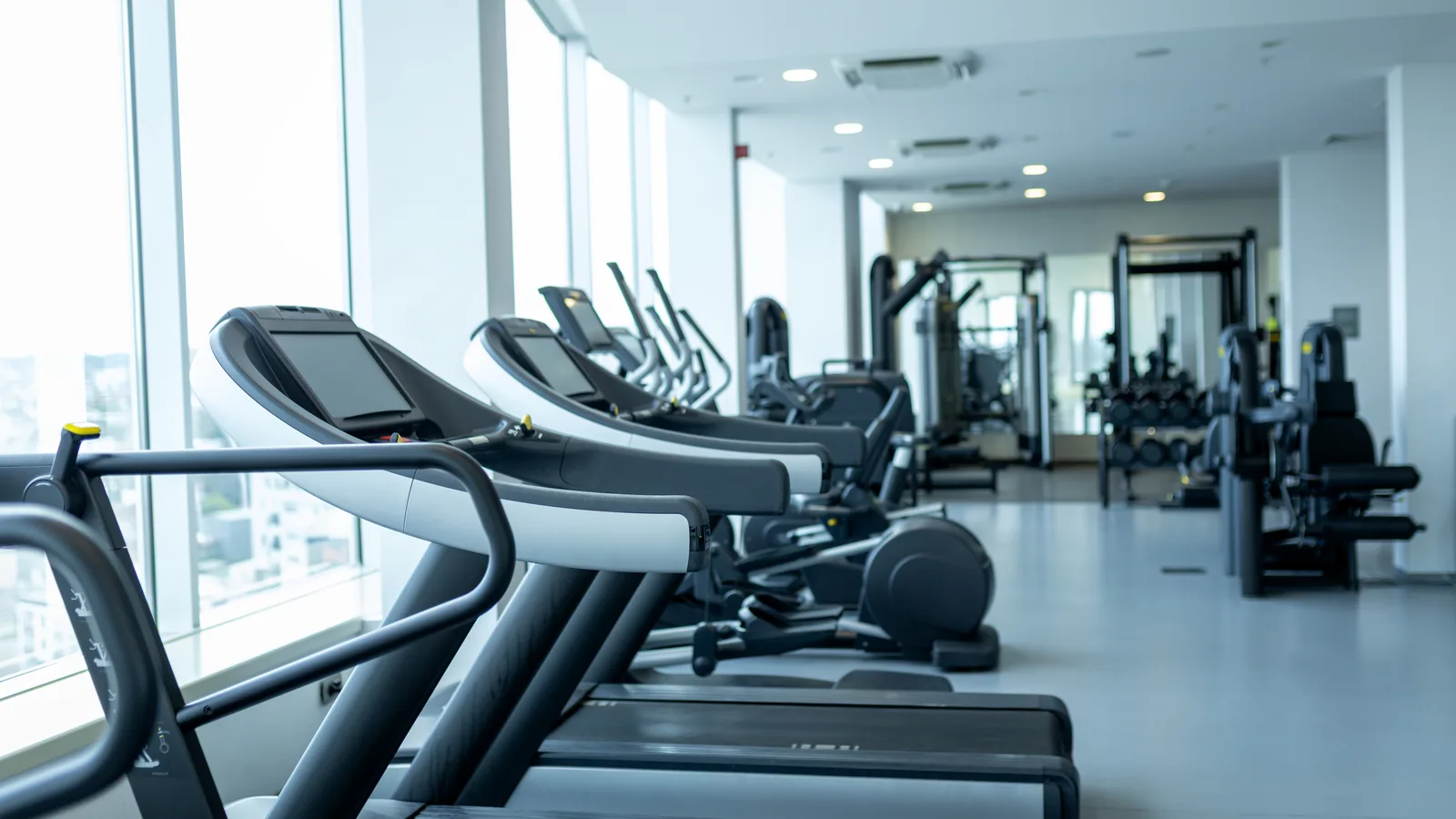
Supervision and records do not prevent claims. What they change is what your defense can prove about a day nobody clearly remembers. A dated service entry, a staffing schedule, and an incident form completed the same afternoon are the difference between arguing from documents and arguing from recollection months later.
What a claim file is actually built from
Picture the file a year after the incident. The member has counsel. The demand letter describes a floor that was crowded, a machine that was failing, and staff who were nowhere. Those are assertions, and they are the only version of the day that exists in writing unless you made one.
Now picture what your side has. If the answer is a manager who has since left and a general sense that the floor is usually fine, the defense is being built out of memory. If the answer is a maintenance log with entries either side of the date, a schedule showing two employees on shift, and a short report completed that afternoon describing what was observed, the defense is being built out of records that predate the claim.
That is the whole mechanism. Records made before anyone knew a claim was coming carry weight that reconstruction never does, and the reason is simply that they could not have been written to win an argument that had not started yet.
Sightlines, and the parts of a floor no one is watching
Supervision is partly staffing and largely layout. Most facilities have areas that are functionally invisible from wherever staff actually stand — behind a rack row, around a corner into a stretching area, the far end of a turf lane, a studio with the door closed.
Those areas are where the awkward claims come from, because nobody can say what happened. An allegation that a member was left unattended in a space where nobody was watching is difficult to answer when it happens to be true of the layout. Walk your own floor from the desk and note what you cannot see; that list is the supervision conversation, and it is more useful than a headcount.
Equipment placement drives it too. Loaded platforms near a walkway, a rack row narrow enough that a passing member is inside the working radius, mirrors that create the impression of visibility where there is none. Our post on where a gym claim actually lands covers why some of these read as premises allegations and others as instruction allegations — the layout question sits on the premises side, and it is the side you control by moving things.
Staffed hours are a related but separate question, since a floor that is supervised at peak and open by fob at six in the morning is really two operations with two different exposures. Our weightlifting gym page covers how that gets described at submission.
A service record is a dated statement about a machine
Equipment maintenance is the area where documentation does the most work, because the claim will be specific and the record can be equally specific.
A useful log is boring: the machine, the date, what was done, who did it, and whether it went back into service. Cable inspections, pin and pulley checks, treadmill belts and decks, upholstery and pads, bolt torque on racks and rigs, the condition of bumper plates and bars. Manufacturer service intervals are a defensible baseline precisely because you did not invent them.
The entries that matter most are the negative ones — the day a piece was flagged, tagged out, and pulled from the floor. A record showing that a machine was removed from use when a problem was spotted answers the allegation that nobody was paying attention, and it answers it with a date. Facilities that only log completed repairs lose that.
Second-hand and older equipment deserves its own attention, not because age is a defect but because provenance and service history are harder to establish later. The same records support a property conversation about what the equipment is worth and where it sits.
The incident form your staff will finish before the shift ends
The single most common documentation failure we see is a form that is too long. A thorough report that takes a while to complete gets filled in carefully for a few weeks and then stops, and a form nobody completes is worse than a short one everyone does.
What a defense actually needs is small: date and time, location in the facility, what was observed rather than what was concluded, who was working, what was done next, whether anything was taken out of service, and whether the member declined assistance. That fits on one side of a page.
Two habits are worth training. First, record observations and not fault — staff should describe conditions and actions, not write that something was somebody’s mistake, because that is a legal conclusion they are not positioned to reach. Second, complete it the same shift. A report written three days later is a memory, and everyone reading it later will treat it as one.
Real-World Scenario: A demand letter arrives more than a year after the incident it describes. The manager who was on duty has moved to another state and the member who reported it is no longer a member. What is left is the paperwork. The maintenance log shows the machine inspected on a regular cadence and tagged out twice in the preceding year, both times with a return-to-service date. The staffing schedule shows two employees on the floor at that hour. The incident report, half a page, describes what was seen and what was done. None of that ends the claim. It does mean the defense spends its time on the facts the records establish rather than on establishing whether any records exist, and that is a materially different file to defend.
Onboarding is where the record starts
The intake conversation produces documentation nobody thinks of as documentation. What the member disclosed, what they were shown, whether they took an orientation, what they signed and when.
The signing itself is worth treating carefully — not because a release settles anything, but because how and when it was executed is exactly what gets attacked. Our post on what a signed waiver actually does is honest about how far a release travels and where it stops; the operational half is making sure yours was signed by the right person at the right time and that you can prove it.
Orientation records matter for a similar reason. A facility that can show a member was walked through the space and the equipment has answered a portion of the allegation that they were turned loose without any introduction at all.
Ordinary conditions are what most claims are built on
The dramatic failure is rare. What generates claims is ordinary: standing water near a fountain or a shower entrance, a mat curling at the edge, a walkway narrowed by plates nobody re-racked, a light out over a stair, chalk or condensation on a hard surface.
The countermeasure is equally ordinary — a walkthrough at fixed points in the day, with a line recorded each time. What that log proves is not that the floor was perfect but that it was being looked at on a schedule, and reasonableness rather than perfection is the standard a general liability claim is measured against.
Employee exposure runs on the same records. The staff who move equipment, clean, and demonstrate movements under load are exposed to the same conditions members are, and the incident documentation that supports a liability defense also supports a workers compensation file.
Video, and the retention window you set by accident
Most facilities we place have cameras, and few of them have a stated retention period. The system overwrites on whatever cycle it shipped with, which means the retention policy was chosen by a default setting rather than by anyone in the business.
That matters in both directions. Footage that shows an uneventful floor is useful and gone by the time the demand arrives; footage that survives is discoverable whatever it shows. The point is not to pick a number here — it is to know what yours is, to make sure someone can preserve a clip quickly when an incident occurs, and to have discussed the retention question with your attorney rather than inheriting it.
What all of this looks like at renewal
At renewal an underwriter is reading two things: the loss record, and the operation behind it. Documentation shows up in both.
The loss record is the slower effect. Facilities that record small events, close them out, and fix what caused them tend to accumulate a different history over several years than facilities that only create paper when something is serious.
The submission is the faster one. An operation that can describe its staffed hours, its maintenance cadence, its class formats, and how incidents are handled is being priced on specifics. An operation that cannot is priced on assumptions, and assumptions are conservative. Our gym insurance cost guide covers what actually moves a program, and the studio page covers how format mix gets described.
Documentation changes the argument, not the outcome
It is worth being blunt about the limit here, because the opposite claim is everywhere. No log prevents a claim. No form makes an allegation go away. A facility that does all of this well can still receive a serious demand arising from something that was nobody’s failure, and a facility that does none of it can go years without one.
What changes is the evidentiary position. Whether your defense argues from records or from memory affects defense cost, settlement posture, and how long the file stays open — and none of it substitutes for the general liability and professional liability coverage that actually answers the claim. Records make the coverage work better; they do not stand in for it.
If you want the coverage half built around how your floor is actually run and documented, tell us how it operates. You can also read about how we work before you do.