
Coverage line
Workers Compensation Insurance for Gyms & Fitness Studios
The line for the people on your payroll — the trainer hurt under a demonstration bar, the instructor worn down by a full teaching week, the front-desk staffer who goes down on the same wet floor a member might.
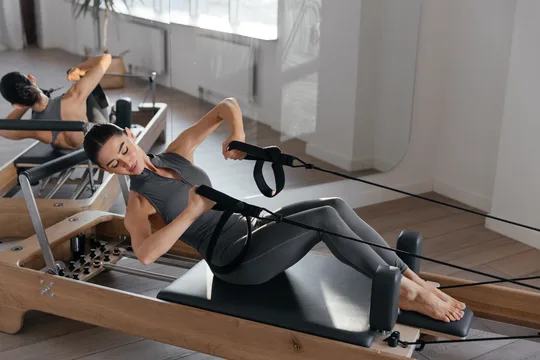

Every business with employees carries workers compensation, and for most of them it is a quiet line that rarely moves. A fitness facility is not most businesses. Your staff do not sit at desks — they load bars, demonstrate movements under real weight, and teach on their feet class after class, exposed to the same room that makes your members sign a waiver on the way in.
That is what makes workers compensation a live line here rather than a formality. It answers when a trainer, an instructor, or a front-desk employee is hurt on the job — on a no-fault basis, under statutory rules that behave differently from any other policy in your program.
This page is about how that line actually works for a fitness business: which injuries land on it, why the payroll line decides whether comp or general liability responds, what the no-fault bargain trades away, the part of the policy that answers a lawsuit anyway, the four states that run the coverage themselves, and the classification question that decides who is covered at all.
The injuries that land on the people you pay
Staff injury at a gym is not the office-ergonomics story workers compensation is built around in most trades. It has its own shape, and a program that understands the trade prices for it.
The most distinctive is the demonstration injury — a trainer hurt showing a movement under load. Coaching is not a spectator job here; the person leading a session is often the person lifting, and a shoulder that gives out mid-demonstration is an on-the-job injury by any reading. The second is repetitive strain, the slow kind: an instructor teaching several classes a day absorbs a workload most employees never touch, and the wear that follows is a genuine comp exposure. The third is the ordinary one every employer carries — the front-desk and cleaning staff who move through the same floor and go down on the same wet patch a member might.
None of these is exotic, but together they make a fitness payroll a different underwriting object than a retail payroll of the same size. A generic small-business comp policy is priced for people who mostly stand and talk; a gym’s people move under load for a living, and the coverage has to be built for that.
Why the payroll line, not the injury, decides which policy answers
Owners reach for the details of an incident — how bad it was, whose fault it looked like, whether a waiver was on file — to work out which policy pays. For the split between general liability and workers compensation, none of that is the deciding fact. One question sorts it: was the injured person on your payroll when it happened?
A member who tears something is a third party, and their injury is a general liability claim brought against your business. A trainer who tears the same thing demonstrating the same movement is an employee, and their injury is a workers compensation claim inside a no-fault statutory system that pays without anyone assigning blame. The mechanism can be identical. The injury is the same; the paycheck decides the policy.
This is why a single event can open two files: the wet floor that catches a member and a cleaner on the same evening produces a liability claim and a comp claim from one puddle. Which side of the payroll line a person sits on is the first thing a claim gets sorted by — worth the owner knowing before the claim does.
A no-fault bargain, not a lawsuit waiting to happen
Workers compensation is less an ordinary insurance policy than a statutory deal, and understanding the deal explains what the coverage does.
In exchange for the certainty that a hurt employee gets defined benefits — medical care and a portion of lost wages — regardless of fault, the employee generally gives up the right to sue the employer over that injury. That trade is called the exclusive remedy, and it is why a comp claim usually resolves as a benefits process rather than as litigation — converting an unpredictable liability exposure into a rule-bound, budgetable one.
The part of the policy that answers a lawsuit anyway
The benefits are set by each state’s statute, not the policy — which is why the same injury is administered differently from state to state, and it is also why the no-fault bargain has edges. Where an injury falls outside them, the ordinary courtroom is back in play, and that is what the second half of the policy is for.
A workers compensation policy has two parts. Part One funds the statutory benefits — the no-fault machine described above. Part Two is employers liability, and it answers the situations the exclusive remedy does not foreclose: a suit brought by someone other than the injured employee, or a claim that slips the edge of the no-fault rule. Part Two is why a comp policy is a liability instrument and not merely a schedule of benefits, and it is one of the underlying lines an umbrella policy sits on top of — which makes it worth confirming those limits are real and adequate rather than a default nobody looked at.
Four states that run the coverage themselves
Most of the country buys workers compensation from private carriers, the way it buys every other line. Four states do not offer that choice for the required coverage, and a facility in one of them is placed differently by design.
North Dakota, Ohio, Washington, and Wyoming run monopolistic state funds. In those four, an employer buys its required workers compensation from the state itself rather than from a private insurer — there is no competing carrier market for the base coverage, because the state is the market. Across the forty-four other states we cover, comp is placed with private carriers on our specialty panel. In the four fund states, the comp itself comes from the fund, and the work shifts to what the fund leaves out: a monopolistic fund typically does not include employers liability, so that Part Two protection is arranged separately, usually as a stop-gap endorsement on another policy. A gym with locations on both sides of that divide runs two program shapes at once, and an owner expanding into a fund state is right to expect the setup to look unfamiliar the first time.
When a “contractor” trainer is really an employee
The most consequential workers compensation question at a gym is often not about an injury at all — it is about who counts as an employee in the first place, decided long before anyone gets hurt.
Plenty of facilities work with trainers they treat as independent contractors. Whether that arrangement holds up for comp purposes is not settled by what the agreement calls the person; it turns on the facts of the relationship — who controls how and when the work is done, whose equipment is used, how integrated the trainer is into the operation. A state fund, an auditor, or a claim can look past the label and treat a “contractor” as an employee, and when that happens it reaches both the premium the facility owes and the question of who was covered when the trainer got hurt. This is a business consideration to settle deliberately at placement — not legal advice, and not a thing to guess at.
Where workers compensation meets the rest of the program
A gym program is a set of lines that meet at defined edges. Workers compensation shares a border with several of them, and knowing where each one falls keeps an owner from assuming comp answers something it never touches — or the reverse.
Workers compensation and general liability. The injury is the same; the paycheck decides the policy. Comp answers the person on your payroll; general liability answers the third party on your floor — the border a fitness business crosses most often, which is why a serious program carries both and treats neither as the other’s substitute.
Workers compensation and professional liability. Comp answers the trainer’s body; professional liability answers the trainer’s judgment. An instructor hurt teaching is comp; a member hurt by what the instructor programmed or corrected is professional liability — a real distinction for the yoga and Pilates studios where hands-on instruction is the product itself.
Workers compensation and commercial auto. An employee hurt while driving for you sits at the seam of both. A staffer injured making an equipment run in a vehicle is still a workers compensation claim for their injuries, while the vehicle and any third party belong to auto — one reason the hired and non-owned piece matters even for the many studios that own no vehicles.
Workers compensation and umbrella liability. The umbrella sits on top of employers liability, not on the no-fault benefits. The statutory benefits are not something an umbrella extends, but the employers liability half of the policy is — which is why that limit is worth reading before a lease or franchise agreement sets a higher requirement over the top of it.
What actually drives a workers compensation quote
Workers compensation does not have a single limit an owner picks the way general liability does — the benefits are set by the state, so the number that moves is the premium, built from the shape of your payroll rather than chosen from a menu.
Two things drive it more than anything else. The first is classification: the work your staff actually do determines how their pay is categorized, and a payroll of working trainers is treated differently from a payroll of desk staff. The second is payroll itself — the premium follows what you pay, trued up at a year-end audit, which is why an accurate picture up front prevents an unwelcome adjustment later. An established facility also carries an experience history that raises or lowers its cost relative to the class. We are not going to publish a number, because the honest one depends on your staff mix, state, and claims history — but those are the levers worth understanding.
Why Gym Guard Insurance
We are an independent agency that writes one class, so when we look at a fitness payroll we are reading it against other fitness payrolls. The things we check first are the ones that actually decide whether the coverage works: whether working trainers are classified correctly, whether anyone treated as a contractor really is one, whether the employers liability limit is adequate rather than a leftover default, and — for the fund states — whether the stop-gap piece a monopolistic fund leaves out has actually been arranged.
We place coverage through a specialty panel across 48 states, for strength and weightlifting gyms, group fitness and cycling studios, and yoga and Pilates studios. If you want your staffing and classification looked at properly before renewal, send your current setup over and we will tell you where it stands. For how staff injury sits beside member injury, see what insurance a gym needs.
Learn more
- General Liability Insurance — the injury on the other side of the payroll line: members and guests.
- Professional Liability Insurance — the injury that follows instruction rather than a shift on the floor.
- Umbrella Liability Insurance — the layer that sits above employers liability and the rest.
- Commercial Auto Insurance — the vehicle side of a staffer hurt on an errand.
- All coverage lines for gyms and fitness facilities
- Strength & weightlifting gym insurance · Group fitness & cycling studios · Yoga & Pilates studios
Frequently asked questions about Workers Compensation Insurance
A trainer strained a shoulder demonstrating a lift to a class. Is that workers compensation or a liability claim?
If the trainer is on your payroll, it is a workers compensation claim, and it is the textbook one for this trade. The demonstration is part of the job, the injury happened doing the job, and the no-fault system responds to medical costs and lost wages without anyone having to prove the gym did something wrong. The identical injury to a member trying the same lift would run through general liability instead. Nothing about the movement decides which line answers — the employment relationship does.
We treat several of our trainers as independent contractors. Do we still need workers compensation for them?
Possibly, and it is worth settling before a claim rather than during one. Whether a worker is genuinely an independent contractor or an employee for comp purposes is decided by the facts of the working relationship — how the schedule is set, who controls the method, whose equipment is used — not by what the paperwork calls them. A state fund or an auditor can look at a "contractor" trainer and treat them as an employee, which changes both the premium and who is covered when they get hurt. This is a business question worth raising at placement, not a label to rely on.
Our gym is in Ohio. Why is our workers compensation set up differently from a friend’s gym in another state?
Ohio is one of four states — with North Dakota, Washington, and Wyoming — that runs its own monopolistic state fund, which means required coverage is bought from the state rather than from a private carrier. In those states the comp itself is placed through the fund, and the piece a specialty broker helps with is what sits alongside it: the employers liability protection that a monopolistic fund does not include, usually arranged as a stop-gap endorsement. For a multi-location operator, it means the program is assembled differently in the fund states than in the rest of the country.
A front-desk employee slipped on a wet floor by the showers. Is that workers compensation or general liability?
If the person who slipped is on your payroll, it is workers compensation, even though the exact same wet floor could produce a general liability claim if a member had gone down on it. Front-desk staff, cleaners, and floor attendants are employees like your trainers, and their on-the-job injuries run through comp. The line is not about where the injury happened or how — it is about whose injury it is. One puddle can generate a comp claim and a liability claim on the same afternoon if it catches both a staffer and a member.
What is employers liability, and why does it come attached to a workers compensation policy?
Workers compensation is the no-fault part: it pays defined benefits for a work injury regardless of fault, and in exchange an employee generally cannot sue you over that injury. Employers liability — Part Two of the policy — answers the situations that fall outside that bargain, such as a suit brought by a third party dragged into the injury or a claim the exclusive-remedy rule does not foreclose. It is the reason a comp policy is a liability instrument and not just a benefits schedule, and it is one of the underlying lines an umbrella policy sits above.
Do part-time instructors and people who only teach one class a week count for workers compensation?
Generally yes — part-time and occasional staff are still staff, and their pay is part of the payroll a comp policy is rated on. The premium follows actual payroll rather than headcount, so a roster of part-time instructors is accounted for by what they are paid, not by how many of them there are. What tends to matter more at audit is that everyone who should be on the payroll is on it, and that anyone classified as a contractor genuinely is one. Getting that right up front is what keeps the year-end audit from turning into a surprise.
Sources
Workers compensation is a state system. In four states, coverage must be bought from a government state fund rather than a private carrier — the monopolistic states described above. Those state-fund authorities:
- Ohio Bureau of Workers’ Compensation — Ohio
- Washington State Department of Labor & Industries — Washington
- Wyoming Department of Workforce Services — Wyoming
- North Dakota Workforce Safety & Insurance — North Dakota
Get workers compensation built for a staff that works under load
Tell us how your team is put together — the trainers, the instructors, the front desk, and anyone you treat as a contractor — and we will market it to carriers that write the class.