
Coverage line
Professional Liability Insurance for Gyms & Fitness Studios
The claim that is not about your floor at all — the one that says the instruction itself, and not the room, is what caused the harm.
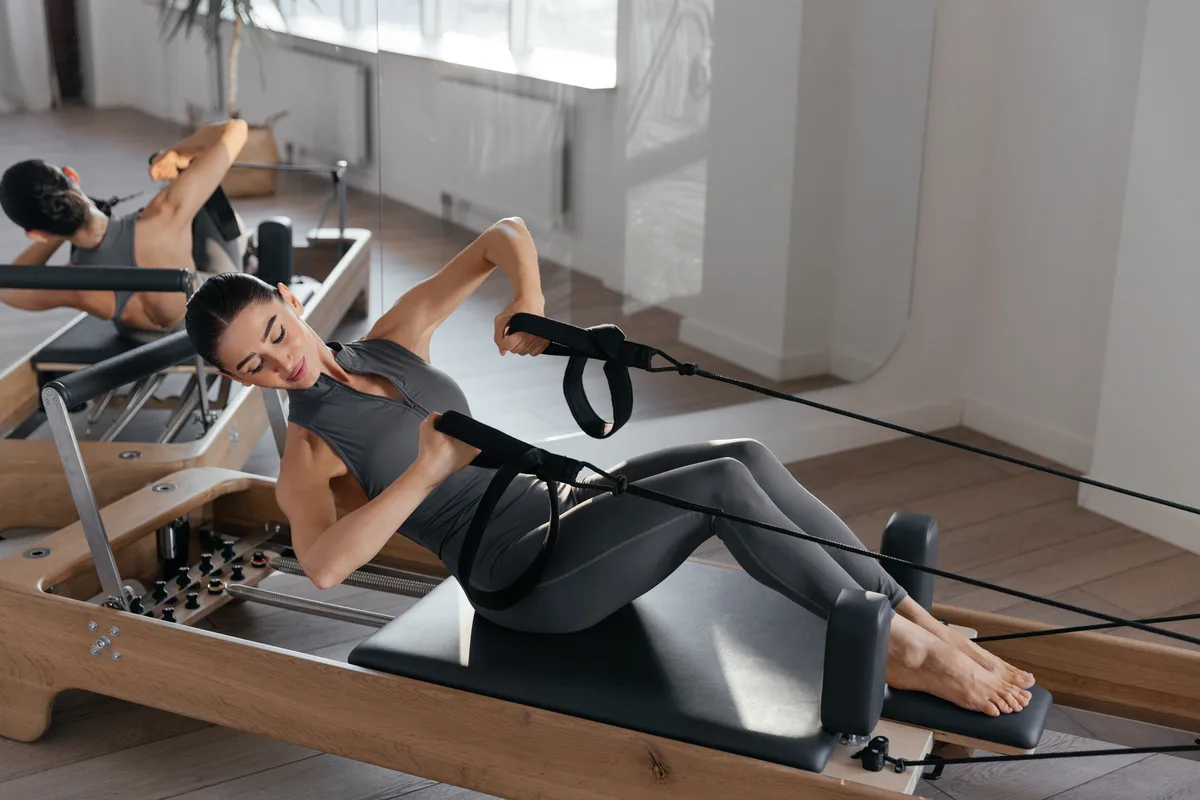

General liability answers the injury on your floor. This page is about the other claim — the one that is not about the floor at all. It is the claim that says the harm did not come from the condition of the room, the state of a machine, or a hazard nobody flagged. It came from the instruction: what a trainer programmed, corrected, judged, or advised, and a member acted on.
Professional liability — often written as errors and omissions, or E&O — is the line built for that argument. It responds when the quality of the guidance your business delivers is put in dispute, rather than the safety of the space you deliver it in. For a facility where coaching is a real part of what members pay for, it is not a luxury bolt-on. It is the coverage that answers the exposure the marketing brochure is quietest about.
This page is about how that line works for a fitness business: the question it actually answers, the four places where instruction turns into an allegation, why a certification is not the protection owners assume, whose coverage responds when instructors are contractors, why there is no off-the-shelf form here, and where the line meets the others.
The claim that is about the guidance, not the ground
The cleanest way to see the line is to notice what an adjuster is being asked to decide. General liability is asked one question: was the premises reasonably safe? Professional liability is asked a different one: was the guidance a member acted on reasonable? The first is a question about the ground — the floor, the fitting, the walkway, the machine. The second is a question about the judgment — the plan, the cue, the call, the advice.
Those two questions can arise from a single incident, and often do. A member who is hurt may argue both that the equipment was set up badly and that the trainer told them to do something they should not have. But they are answered by different lines, worded around different risks, and a policy strong on one can be silent on the other. That is why a fitness program is not finished when general liability is placed. The instruction is a separate exposure, and it needs a line pointed at it.
The reason this matters more in fitness than in most trades is simple: instruction is not incidental to the business, it is much of the product. People do not pay a coach to watch them; they pay to be told what to do and how. The more genuinely the instruction is the thing being sold, the more directly a claim can be aimed at it — and the studios where teaching sits at the center, like the yoga and Pilates studios we write, feel that most sharply.
Where a trainer’s judgment turns into the allegation
In practice, a professional liability claim against a fitness business tends to gather around one of four moments. None of these is about a hazard in the room. Each is about a decision an instructor made and a member says caused harm.
Programming. The plan itself — what it asked a body to do, in what order, at what jump. A member who says a routine loaded too much too fast, progressed them beyond where they were, or ignored what they had disclosed is making a programming allegation. The argument is about the design of the session, not the state of the floor it happened on.
Form correction. The cue given in the middle of a movement — the adjustment called out, the instruction to change what a member was doing mid-set. When a member says the correction itself is what hurt them, the claim is about the words, not the walkway.
Spotting. The judgment call made under a loaded bar — when to step in, when to take weight, when to let a rep finish. A member who says a spot came too late, too early, or not at all is disputing a professional decision made in real time.
Modification. The option offered to a member working around an existing limitation — an alternative movement, a scaled version, a substitution suggested for someone who disclosed a prior issue. A member who says the substitute an instructor proposed made an existing injury worse is bringing the archetypal instructed-movement claim: a member who says the instruction caused the injury.
Note what all four have in common as a claims matter: the facility can have done nothing wrong with its building and still be looking at a demand. The incident report your staff files on a day like that reads differently from a slip-and-fall report — it is about what was said and decided, not about what was wet or loose. That difference is the whole reason this line exists.
Certifications are private credentials, not licenses
A great deal of comfort in this trade is placed on certifications, and some of it is misplaced in a way that matters when a claim arrives.
The major fitness certifications are issued by private certifying organizations. They are genuine credentials — evidence that an instructor met a standard the certifying body sets, and worth requiring your staff to hold and keep current. But a private credential is not a government license, and in general there is no license to hold, because personal trainers are typically not licensed by states at all. That is not a gap in anyone’s paperwork; it is simply how the field is regulated, or rather largely is not.
The consequence for coverage is the part owners miss. A credential sets a professional standard; it does not pay for a defense, and it does not resolve a claim. If anything, a well-credentialed staff is a reason the instruction is taken seriously — which cuts both ways when a member argues that seriously-offered guidance is exactly what harmed them. Professional liability is the instrument that actually responds when the quality of that guidance is contested. The certification on the wall is not a substitute for it, and no carrier treats it as one.
Whose policy answers when the trainer is a contractor
Many fitness businesses run at least some of their instruction through independent contractors rather than employees — the coach who rents floor time, the specialist who comes in for a weekly class, the instructor who teaches at three studios and none of them exclusively. That arrangement is completely ordinary, and it raises a question worth answering before a claim rather than during one: whose professional liability responds.
As a general business matter — and this is a consideration for you to settle with your own advisors, not legal advice we can give in the abstract — a contractor who carries their own errors-and-omissions coverage brings their own answer to a claim about their teaching, while an instructor you employ is normally looked to under the facility’s own program. The trouble lives in the space between those two clean cases: the contractor everyone assumed was covered and was not, or whose coverage lapsed, or whose policy excluded the very thing they were teaching.
The practical move is unglamorous and cheap. Decide, in writing, who carries professional liability for each instructor before they ever take a class, and confirm it rather than assume it. Facilities that host outside instructors or rent space to independent coaches — common across group fitness and cycling studios — carry a wider version of this question than their own payroll suggests, and it is far better raised at placement than after an instructor’s uninsured claim lands on the studio’s desk.
There is no off-the-shelf form written for this class
It is worth being plain about something the general liability page could not say. General liability sits on a long-standing standard industry coverage form, so two general liability quotes for a gym start from broadly the same text. Professional liability for fitness instruction does not work that way. There is no single standard errors-and-omissions form written for this class the way there is a standard general liability form.
That means the coverage is largely manuscript — assembled from carrier-specific wording that varies meaningfully from one program to the next. What counts as a covered professional service, whether the definition reaches the specific things your instructors actually do, how the policy handles a claim that names both the premises and the instruction, whether it responds to the conduct of contractors as well as employees — all of that is written differently across the market, and none of it is safe to assume. We are not going to name a form number for this coverage, because there is no honest one to name; pretending otherwise would be worse than useless. The way to know what a professional liability quote actually covers is to read its wording against what your business really does, quote by quote.
Where professional liability sits among the other lines
A gym program is a set of lines meeting at defined edges. Professional liability has its own borders, and knowing where they fall is what stops an owner from paying twice for one risk or, worse, assuming a risk is covered when it sits just past the edge.
Professional liability and general liability. This is the seam that defines the trade. General liability is asked whether the premises were reasonably safe; professional liability is asked whether the guidance a member acted on was reasonable. A member hurt because a fitting failed or a mat was curled is the first line’s question. A member hurt because of what a trainer programmed, cued, or advised is the second line’s question. Because a single incident can raise both, a serious fitness business carries both rather than betting a claim will land cleanly on one side of the edge.
Professional liability and workers compensation. The dividing line is who was hurt. Professional liability answers a member’s claim about instruction; when it is the instructor who is injured — demonstrating a movement under load, worn down by teaching class after class — that is a workers compensation matter inside a no-fault statutory system, not a professional liability claim at all. The instruction can be the very thing happening in both, but the injured party decides the line.
Professional liability and commercial auto. Instruction does not stop being a professional risk because it happens off-site, but the drive to get there is a different line. A trainer heading to an offsite client or a pop-up class sits in the auto program for the trip itself; the coaching delivered on arrival is back in professional liability. The vehicle marks the handoff.
Professional liability and umbrella liability. A single serious instructed-movement claim can run past the limit on a primary professional liability policy. Where the underlying wording allows it, an umbrella can sit above the professional line to answer what is left — and a landlord or franchisor setting limit requirements in a lease or franchise agreement is frequently the reason a facility carries that extra height at all.
Limits and the shape of an E&O policy
Professional liability limits are usually expressed as a per-claim amount beneath an aggregate for the policy period. We are not going to put a number on the page, because the right limit for your facility turns on things a web page cannot know: how central coaching is to your model, how many instructors deliver it, whether they are staff or contractors, and what a lease or franchise agreement requires you to carry.
What is worth understanding structurally is the basis. Unlike the general liability that commonly sits on an occurrence trigger, professional liability in this class is frequently written claims-made — it responds by reference to when the claim is made rather than when the instruction was given. That makes the retroactive date, and what happens to prior acts when you switch or drop the policy, real questions rather than fine print. Combined with the absence of a standard form, it means two professional liability quotes can differ as much in what they cover as in what they cost. Reading the basis and the wording, not just comparing headline limits, is where the actual protection is decided.
Why Gym Guard Insurance
We are an independent agency that writes one class. When we read a professional liability quote for a gym, we are reading it against other fitness quotes, and the things we check first are the things that decide whether the coverage is real: whether the definition of professional services actually reaches what your instructors do, how the wording handles a claim that names both the premises and the instruction, whether contractor teaching is answered, and what the claims-made mechanics really commit you to.
We place coverage through a specialty panel across 48 states, for strength and weightlifting gyms, group fitness and cycling studios, and yoga and Pilates studios. If you want the professional liability sitting next to your general liability read for whether it is real or decorative, send your current policy over and we will tell you what it actually covers. For the whole program in one place, see what insurance a gym needs.
Learn more
- General Liability Insurance — member and guest injury on your premises, and the exclusion to check for.
- Workers Compensation Insurance — the instructor hurt teaching, on the other side of the payroll line.
- Commercial Auto Insurance — the drive to the offsite client the coaching itself does not cover.
- Umbrella Liability Insurance — the height a lease or franchise agreement asks for above the professional line.
- All coverage lines for gyms and fitness facilities
- Strength & weightlifting gym insurance · Group fitness & cycling studios · Yoga & Pilates studios
Frequently asked questions about Professional Liability Insurance
Is professional liability the same thing as the general liability we already carry?
No — they answer different questions, and a fitness business generally needs both. General liability responds when the premises are blamed: a member trips on a curled mat, a plate is left underfoot, a fitting fails. Professional liability responds when the instruction is blamed: a member says the program a trainer wrote, the correction a trainer called out, or the modification a trainer suggested is what caused the harm. One incident can raise both arguments at once, which is why carrying one does not make the other redundant.
Most of our trainers hold certifications from recognized bodies. Doesn’t that protect the studio?
A certification is a private credential — evidence that an instructor met a certifying organization’s standard — and it is worth having your staff hold current ones. But a credential is not a license and it is not insurance. It does not pay a defense lawyer, and it does not settle a claim. In fact, personal trainers are generally not licensed by states at all, so the credential is a professional standard your business sets, not a legal permission a regulator grants. Professional liability is what actually answers when the quality of the instruction is put in dispute.
Our instructors work as independent contractors. Whose errors-and-omissions coverage answers a claim about their teaching?
That depends on how the arrangement is written and how the facility is set up, and it is a business question worth settling in advance rather than a legal opinion we can give you in the abstract. As a general matter, an independent contractor who carries their own professional liability brings their own answer to a claim about their instruction, while an employed instructor is normally looked to under the facility’s program. Where facilities get caught is the gap in between — a contractor everyone assumed was covered, who was not. Confirming who carries what, in writing, before an instructor ever takes a class, is the cheap version of this conversation.
A member says a modification one of our trainers suggested made an existing injury worse. Which line responds?
That is a professional liability claim in its purest form. The allegation is not that the room was unsafe; it is that the guidance itself was unsound — that what the instructor advised the member to do, given what the instructor knew, caused harm. General liability is built around the condition of the premises and may not reach an argument framed entirely around the instruction. This is exactly the seam professional liability exists to close, and it is the reason a facility where teaching is central should not treat the line as optional.
We run self-guided open-gym access with very little coaching. Do we still need professional liability?
It is worth a candid conversation rather than an assumption in either direction. The less instruction your business actually delivers, the smaller this exposure tends to be — a facility that is genuinely a room with equipment and a keyfob carries less of it than a coaching-led studio. But most gyms deliver more instruction than they think: an intro session, a form check at the desk, a staff member who steps in to adjust a set-up. Wherever a member can plausibly say they acted on your guidance, the exposure exists, and the honest answer comes from describing how your floor really runs rather than from the label on the door.
Why is our professional liability quote written on a different basis than our general liability?
Because the two lines are commonly built differently. General liability for a gym is usually written on an occurrence basis, responding to injury that happened during the policy period whenever the claim arrives. Professional liability in this class is frequently written on a claims-made basis instead, responding by reference to when the claim is made — which makes the retroactive date and what happens when you change or stop the policy real things to understand rather than fine print. There is also no single standard industry form for fitness-instruction coverage, so two quotes can differ in wording as much as in price. Reading the basis and the wording, not just the limit, is where the value is.
Get the coverage for the instruction, not just the floor
Tell us how your facility teaches — the classes, the coaching, the contractors on the floor — and we will market it to carriers that write the professional line for fitness.