

A member is hurt during a class and the file that lands on your desk does not say which policy answers. Two lines could. Which one does depends less on what happened in the room than on what the member says went wrong. That distinction is the seam this post is about.
Condition of the room, content of the coaching
Start with the cleanest version of the split. The dividing line is not where the harm happened but what the harm is said to have come from: an injury attributed to the condition of the premises and its equipment belongs to general liability, while an injury attributed to instructed movement — what a member was told, cued, or progressed toward — belongs to professional liability.
One is about the state of a physical place. Loose flooring, a machine overdue for service, a walkway narrowed by equipment nobody re-racked, condensation under a rower, a step that reads differently in low light. The question is whether the space a business invited people into was reasonably safe.
The other is about the substance of what was taught. The session as designed, the order it asked for, the jump it made, the correction called out mid-movement, the judgment made under a loaded bar, the alternative offered to someone working around something they had disclosed. The question is whether the direction a member acted on was reasonable.
Those are different questions, evaluated against different standards, and they are answered by different policies worded around different risks. A facility can be excellent at one and exposed on the other.
The allegation routes the claim, not the injury
Here is the part that surprises owners, and it is worth stating flatly: the line that picks up a claim is chosen by what is asserted, not by what an owner believes actually occurred.
Coverage responds to allegations. A member who genuinely tripped over their own feet can file a claim asserting the walkway was obstructed, and that assertion is what a premises-focused line evaluates. A member hurt by an unsuspected equipment failure can file a claim asserting the coaching was inappropriate for someone at their stage, and that assertion is what an instruction-focused line evaluates. The facts get sorted out later, often much later, and frequently at considerable expense in the meantime.
This is why the instinct owners bring to the question misleads them. They picture the incident — the video, the report, what the manager on duty saw — and reason from the event to the policy. Claims professionals reason from the document, because the document is what has to be answered. The event and the theory of the event are not the same object.
One afternoon, two stories, both available
Take a single ordinary incident and notice how easily it forks.
A member finishes a working set, moves to the next station, and comes down badly. Told one way, the story is about the room: the station was crowded, the mat had shifted, the platform edge was worn, nobody had cleared the space between stations. Told another way, the story is about the teaching: the format moved faster than this member could manage, the load progression was inappropriate for someone at their stage, the coach was cueing across the room instead of watching the movement in front of them.
Same afternoon, same person, same injury. Two entirely different claims, each pointing at a different policy, each requiring a different defense built from different evidence. Maintenance records and cleaning logs answer the first. Class plans, instructor credentials, intake notes, and what your staff document answer the second.
Nothing forces a member to pick one. Nothing charges them extra for asserting several.
Real-World Scenario: A member is hurt during a small-group session and the demand letter that arrives weeks later asserts, in the same paragraph, that a rower was out of service and left in the training space and that the coach progressed her past what her intake form disclosed. The facility’s owner reads it and sees one incident, and he is right about that. His program is now being asked two questions, and the answer to whether both get funded was decided at renewal, long before anyone slipped or was told anything.
What the incident report is actually recording
Most facilities write incident reports as a record of what physically happened. That is useful and it is not sufficient, because half of what a claim may allege is not physical at all.
A report that captures the condition of the space — where it happened, what the surface was like, when the equipment was last serviced, who cleaned what and when — is answering the premises question well. A report that captures nothing about the session leaves the instruction question to memory, and memory is a poor witness a year later when a coach has moved on and the class in question is one of hundreds.
The more complete habit is to record both sides: what the room was like, and what was being taught. What the format was, who was leading it, what was written for that session, what the member had disclosed, what modification was offered. None of that changes whether a claim arrives. All of it changes how well either line can be defended when one does.
The facilities sitting closest to the seam
Every fitness business has both exposures, but they are not evenly weighted, and the weighting moves with the format.
A facility built around unstaffed access and open equipment concentrates on the premises side. The room does most of the work, members largely direct themselves, and the claims that follow tend to be about the state of the space. That is not a low exposure — it is simply a lopsided one, and it can lull an owner into thinking a single line is the whole program.
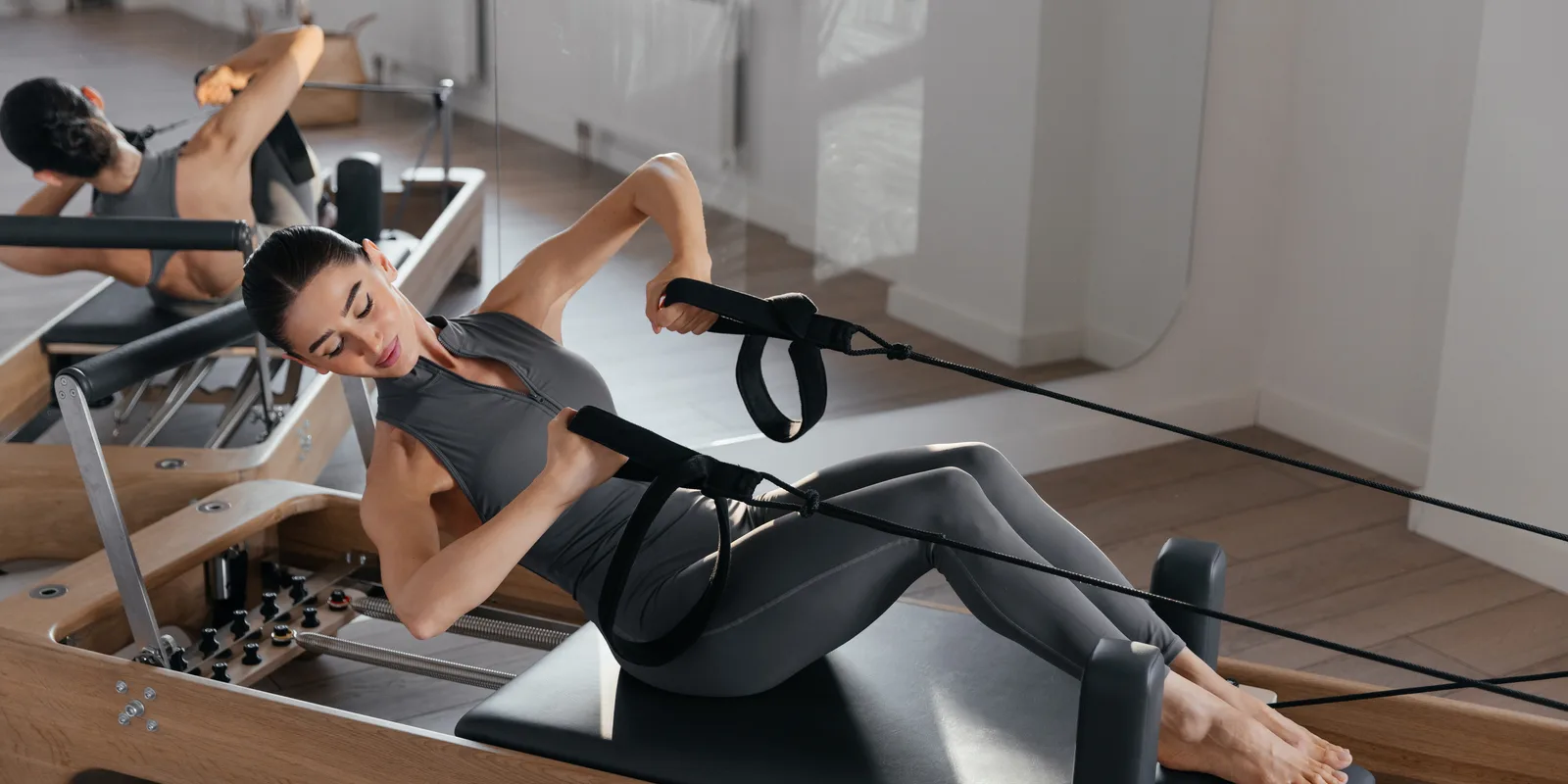
The opposite end sits with formats where teaching is the product. Group fitness studios run coached sessions where a room full of people are doing what someone is telling them to do, on a clock. Yoga and Pilates studios build their entire offering on cueing and progression. Barbell-focused facilities put both exposures under the same rack at once: heavy equipment that can fail, and coaching decisions made in the moment under load.
The lesson from that spread is not that one format is riskier. It is that a program assembled around what a facility looks like will underweight what a facility teaches, and the seam is exactly where that mistake shows up.
What is exposed when only one line is in force
Owners rarely decide to carry one and not the other. They arrive at it by describing their business one way and letting the program follow.
When only the premises-focused line is in place, everything built on instruction is exposed — and, worse, exposed while feeling covered, because the certificate on the wall says liability and nobody reads further. The first indication is usually a coverage position taken on a demand that asserted the coaching caused the harm, and by then the argument is happening on somebody else’s clock.
The reverse gap is rarer but real for lean operations that lease space and think of themselves as teachers rather than as occupiers of a room. If members are in a space you control, the condition of that space is your exposure regardless of how you describe your business.
There is a third asymmetry worth naming, because it catches people. Neither line answers an injury to your own staff. A coach hurt while spotting is a workers compensation matter entirely, and that is true no matter how the incident is later characterized by anyone else.
When both lines answer at once
Where a claim asserts both theories, two policies can be engaged over one event, and that raises questions that are not academic.
Which carrier controls the defense, how a settlement gets apportioned, and whether the total demand exceeds what the primaries were written to hold are all live issues in a claim of any size. An umbrella sitting over both primaries is what keeps a single serious matter from testing two ceilings independently. The structural point is that these lines are not interchangeable and not redundant — they are adjacent, and adjacency is where the friction lives.
It is also why the seam is worth understanding before a claim rather than during one. The version of this conversation that happens after a demand letter arrives is a much less pleasant conversation than the one at renewal.
Why the seam gets described badly on submissions
Submissions describe buildings. That is the honest reason so many fitness programs end up premises-heavy: the application asks about square footage, equipment, hours, and staffing, and the answers paint a room.
Almost nothing on a standard form asks what your business teaches — how sessions are programmed, who writes them, how instructors are engaged, what happens when a member discloses a limitation on intake. An underwriter shown a room prices a room. The teaching side gets underweighted not because anyone hid it but because nobody was asked.
The correction is to describe both deliberately and in the submission itself, not in a phone call afterward. What is in the space and how it is maintained, then what your staff direct and how that is documented. Our gym insurance cost guide covers what underwriters actually weigh, and the rules that shape both exposures differ by state — our state pages set out the regulatory picture where you operate.
Reading your own program for the gap
The practical version of everything above fits in one exercise. Take an incident that has actually happened at your facility — a real one, from a real week — and write the two versions of it. The version where the room caused it, and the version where the teaching caused it.
Then ask which of the two your program answers, and how well each could be defended with what you already have on file. If the second version is harder to write, that is usually a documentation gap rather than a coverage gap. If it is easy to write and you cannot say which policy would take it, that is the other kind of gap, and it is the expensive one.
A waiver does not resolve this either way, whatever the clipboard at your front desk implies — what a signed waiver does and does not do is a defense question, not a routing question. The routing was settled by what you bought.
If you want the seam checked properly against how your facility actually runs — the room, the teaching, and the documentation behind both — tell us how the place operates and we will build a program that answers either story.