Gym & fitness insurance by state
Gym & Fitness Business Insurance in Wyoming
From Cheyenne and Casper to the university town of Laramie — coverage built around member injury, hard winters, and Wyoming’s monopolistic state-fund comp.

Wyoming runs the smallest fitness market in the country, and one shaped by its economy. Cheyenne and Casper anchor it, the university town of Laramie adds a young and active floor, and the energy-economy cities of Gillette and Rock Springs round it out — mostly independent gyms serving communities that pull hard on an indoor facility through severe winters. It is a distinctive place to run a gym, and one where two things set the coverage picture apart from a typical private-market state.
The first is that the state does almost nothing to regulate the fitness business specifically. The second is that Wyoming handles workers compensation through a monopolistic state fund rather than the private market — a structural difference that changes how a gym here assembles its program. Neither is a reason not to operate; both are reasons to build the coverage deliberately. This page walks through both, and the member injury the whole program is really about.
Wyoming has no health-club statute — the state’s story is elsewhere
Where a state regulates gyms, it is usually through a consumer-finance law about prepaid dues. Wyoming does not have one. Wyoming has no health-club-specific act; gym memberships fall under the general Consumer Protection Act, with no registration, bonding, or escrow regime. In plain terms, no health-club registration and no prepaid-dues bond or escrow, and the state’s general AED use-and-immunity law applies without imposing a health-club presence requirement.
It is worth stating plainly and then setting aside. The general Consumer Protection Act still governs how you advertise and contract, but there is no bond, no escrow, and no fitness-specific registration to file. That thin regulatory layer does not shrink the exposure that drives claims — the member on the floor — which is exactly where a Wyoming gym’s real coverage attention belongs. In a state this small, the differentiation is not in the statute book; it is in the market and the comp structure.
Wyoming is a monopolistic workers-compensation state
Wyoming is one of the four monopolistic workers-compensation states: coverage is written through the state fund, not a private carrier, so a gym handles staff comp differently here while placing its liability lines privately.
In practice this splits a Wyoming gym’s program into two channels. The workers compensation that answers an injured trainer or front-desk employee runs through the state fund, while general liability answers the injured member and property, professional liability, and umbrella answer the rest — all placed privately. Same room, two different systems, and here the split runs deeper than usual because the comp side is not something you buy from a carrier at all. Knowing which claim goes to which channel is a real part of operating here, and it is one of the first things we walk a new Wyoming owner through.
Even in the country’s smallest market, member injury is the exposure
Scale does not soften the defining exposure. A Wyoming strength or functional-fitness gym lives with loaded-movement injury — the dropped bar, the failed rep, the platform and whoever is near it. A group-fitness or cycling class lives with class-volume risk — bodies moving at pace under one instructor’s eye. A yoga or Pilates studio lives with the instructed movement and the hands-on adjustment, where the claim tends to follow what was taught. A single Cheyenne or Casper facility often runs more than one of these under one roof.
That is why even a small Wyoming gym program is usually built as one structure covering general liability, professional liability for the instruction, commercial property for the racks and machines, the state-fund comp arrangement for the staff, and umbrella limits over the top — sized to the actual blend rather than a single label. Waivers matter here, and Wyoming enforces them within limits: worth having, never a guarantee, and never a substitute for the coverage that pays when a claim lands.
The Wyoming claim, and the equipment-dense floor
The claims that reach a Wyoming gym owner rarely look dramatic on the surface. A member finishes a heavy set and the bar comes down wrong. Someone steps off a treadmill still moving and goes down. A participant deep into a packed winter class catches an edge. A studio member says an assisted movement went further than agreed. None of these require a broken machine — the member was doing the thing your facility exists to let them do, and it went wrong.
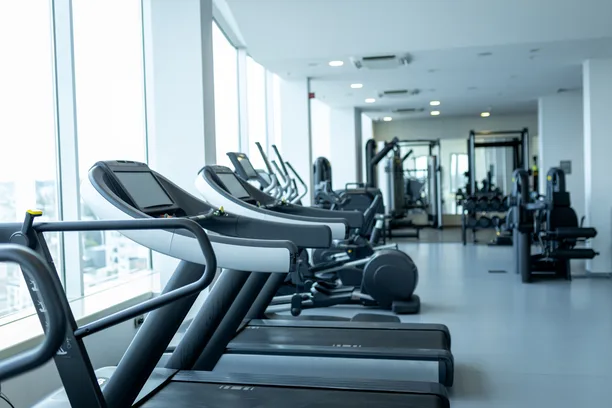
Wyoming gyms also tend to be equipment-dense, and in a strength facility the racks, platforms, machines, cardio fleets, flooring, and mirrors are often the largest single concentration of value in the building. Commercial property answers damage to those assets, and business income answers the closure behind them. What makes the difference in a Wyoming claim, though, is usually the paperwork — whether the member who got hurt had signed anything, whether the instruction is defensible, and whether the incident was documented. We would rather walk a Wyoming owner through where those exposures sit than have them discover the gaps during the claim that follows a class.
The practical mechanics of state-fund comp for a Wyoming gym
Because Wyoming writes workers compensation through a monopolistic state fund, the mechanics differ from what an owner who has operated in a private-market state expects, and the differences are worth naming. Coverage for your employees is obtained through the state system rather than quoted and bound alongside your liability lines, which means the comp piece and the rest of the program are assembled through two different channels rather than one. An owner opening a Wyoming facility, or expanding into the state from elsewhere, has to set up the state-fund side deliberately rather than assuming a single policy will carry everything.
That split also changes how a claim is handled. When an injured employee’s claim runs through the state fund and an injured member’s claim runs through your general liability carrier, the first question after any incident is which system it belongs to — and for a gym, where the person hurt might be a trainer demonstrating a lift or a member attempting one, that question is not always obvious at the moment it happens. Getting the classification right, and knowing which channel answers, is a real part of operating here, and it is one of the first things we walk a new Wyoming owner through.
Business income when the energy economy turns
Wyoming’s economy moves with energy prices and the university calendar, and a gym’s membership base moves with it. That makes business income coverage matter in a way that is specific to the state. A covered closure — a winter building loss, a fire, a system failure — stops membership revenue while the lease and core payroll continue, and in a Gillette or Rock Springs facility that closure can land in the same stretch the local economy is already soft. The property and business-income limits are what determine whether the business can absorb a badly timed loss or is forced to give up ground it will struggle to win back. In a small community, membership is built one relationship at a time, and a long dark stretch after a loss can cost a Wyoming gym members it will spend a year re-earning.
The through-line for a Wyoming gym is that the state’s thin fitness-statute layer says nothing about any of this. The comp structure, the business-income sizing, and the liability limits are the substance of the program, and they are the parts a generic small-business policy handles worst. We build the Wyoming program around those realities rather than around a statute book that, on the fitness-specific side, is nearly empty.
The Wyoming fitness markets we cover
Wyoming’s market is the smallest in the country — Cheyenne, Casper, the university town of Laramie, and the energy-economy cities of Gillette and Rock Springs — with strong indoor demand through severe winters and mostly independent gyms. We place coverage across it — the gyms of Cheyenne and Casper, the university floor in Laramie, and the market in Gillette and Rock Springs — for owners who want a program built around how a Wyoming facility actually runs, including the state-fund comp arrangement. For a plain read on all of it, send us your details and we will walk you through it.
Why Gym Guard Insurance in Wyoming
We are an independent agency that writes one class — gyms and fitness facilities — and we read a Wyoming quote against other Wyoming quotes. That means we check the things that actually decide whether a policy will work here: how participant injury is treated, whether the professional liability alongside is real, how the state-fund comp arrangement fits with the privately placed lines, and whether the program reflects the real mix of barbell, class, and studio activity under your roof. Wyoming has no dedicated health-club statute — gyms sit under general consumer law — so the state’s story is its small, energy-and-university market and its monopolistic workers-compensation posture rather than any registration or bonding regime.
Learn more
- General Liability Insurance — member and guest injury on your premises, the signature line.
- Professional Liability Insurance — the injury that follows instruction.
- Workers Compensation Insurance — the staff side, and how it fits Wyoming’s state-fund system.
- Wyoming gym insurance cost guide — what moves a quote in Wyoming up or down, state rules included.
- Strength & weightlifting gyms · Group fitness & cycling studios · Yoga & Pilates studios
- All states we serve · All coverage lines
Gym and fitness insurance in Wyoming — FAQ
Wyoming has no gym-specific consumer law — is anything protecting prepaid memberships?
Wyoming has no health-club-specific act, so gym memberships fall under the general Consumer Protection Act rather than a bonding or escrow regime built for fitness businesses. There is no health-club registration, no prepaid-dues bond, and no state escrow requirement. That is simpler than what an owner faces in a registration-and-bond state, but it does not touch the exposure that actually drives claims — a member hurt on your floor — which no consumer statute was ever going to answer. The absence of a fitness-specific law is a fact about paperwork, not about risk.
How does workers compensation actually work for a Wyoming gym?
Wyoming is one of the four monopolistic workers-compensation states, which makes it different from most of the country. Coverage for your staff is written through the state fund rather than bought from a private carrier, so the comp side of your program is handled through the state system while your liability lines — general liability, professional liability, property, umbrella — are placed privately. It is a two-channel picture: the state fund answers the injured employee, and a private program answers the injured member and the rest of the business. Knowing which claim goes where is the practical part of running a gym here.
Does Wyoming require an AED in our gym?
Wyoming has no statute requiring a health club specifically to keep an AED on site. The state’s general AED use-and-immunity law applies, but there is no health-club presence requirement of the kind states like California or Illinois impose. Many Wyoming gyms keep an AED regardless, and a landlord or franchise agreement may call for one — but as a matter of state law, the fitness-facility mandate that exists elsewhere is not on the books here. It is a decision to make deliberately rather than a rule to comply with.
We run strength training and classes out of one Casper facility. Is that one policy or several?
It is usually one program written to reflect the whole mix. A single Wyoming floor that runs loaded strength work alongside group classes carries more than one injury profile under one roof, and a gym program covers general liability, professional liability, property, the state-fund comp arrangement, and umbrella limits as one structure sized to those activities. In a smaller market the temptation is to buy a generic small-business policy and move on, but that policy is priced for a retailer’s slip-and-fall, not for participant injury — describing what actually happens on your floor is what gets the coverage right.
A member says a trainer’s instruction is what caused the injury — is that general or professional liability?
That allegation lands on the professional-liability side of the line. General liability answers the member simply hurt on your premises — the fall, the dropped plate, the wet floor. Professional liability answers the claim that the injury came from what a trainer told or did — the cue, the correction, the programmed movement the member says went too far. Even a small Wyoming gym that leans on coaching generates the second kind of claim, which is why the two lines are sized together on one program rather than assuming general liability alone will answer an instruction claim.
The energy economy swings and our winters are hard — do property and business income really matter here?
They do, on both counts. Commercial property answers damage to your equipment and contents — a burst pipe in a deep cold snap, or a loss tied to a heavy storm — and business income answers the harder problem behind a closure: the stretch of days the doors stay shut while membership revenue stops but the lease payment does not. In a Wyoming energy-and-university town, membership can move with the local economy, which makes a revenue interruption sting more, not less. The building risk and the revenue risk belong in the same conversation as the liability coverage rather than treated as afterthoughts.
Sources
The Wyoming regulatory statements on this page are drawn from primary government sources. Verify them directly:
- Wyoming Attorney General (Consumer Protection) — the administering agency
Get gym insurance built for how you run in Wyoming
Tell us your formats, your staff, your equipment, and how you handle the state-fund comp arrangement — and we will market it to carriers that write the class across Wyoming.