
Gym & fitness insurance by state
Gym & Fitness Business Insurance in Washington
From the Seattle–Bellevue–Tacoma corridor to Spokane — coverage built around member injury, the state comp fund, and the 2024 AED requirement.
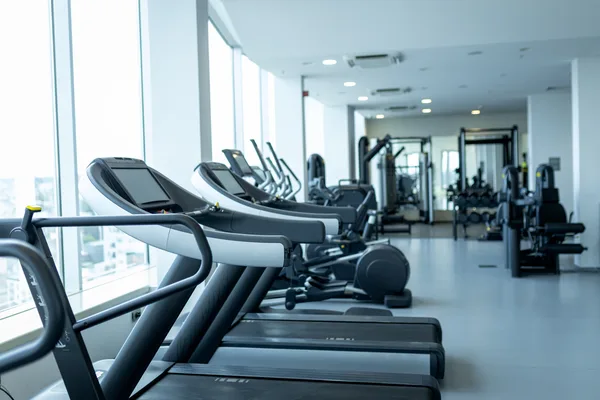

Washington has a strong, distinctive fitness culture — heavy boutique-studio, climbing, and functional-fitness demand up and down the Seattle–Bellevue–Tacoma corridor and out to Spokane, with the wet season keeping indoor floors busy for much of the year. It is a good market to run a gym in, and it is also one of the states where two things about insuring one work differently enough to get wrong if you assume Washington runs like everywhere else.
The first is workers compensation, which here comes from the state rather than a private carrier. The second is a defibrillator requirement that only took effect in 2024. Neither is a reason to hesitate about the market; both are reasons to build the program with the state’s actual rules in view. This page walks through what governs a Washington gym and how the coverage is built around the member injury that defines the trade.
Washington writes workers compensation through the state, not a carrier
Washington is one of the four monopolistic workers-compensation states: coverage is written through the state fund (Labor & Industries), not a private carrier, so a gym handles staff comp differently here from most of the country while placing its liability lines privately. That is the single biggest structural difference in a Washington gym program. In most of the country, comp is one line in a package placed with a private insurer; here it runs through Labor and Industries on its own basis, and the private market handles the liability lines. So a Washington program is assembled in two channels — the state fund for the staff-injury coverage, and general liability, professional liability, property, and the rest through the panel. A conversation that assumes comp rides along with everything else misses how the state actually works, and it is exactly the kind of thing we sort out at the start rather than during a staff-injury claim.
The 2024 AED requirement is real, recent, and easy to miss
As of 2024, a membership-based fitness center in Washington must keep at least one semiautomatic external defibrillator on the premises, with narrow exceptions for schools, incidental-fitness nonprofits, and private non-membership home facilities. Because the rule is recent, a policy or a compliance checklist written earlier may not reflect it, and it is the sort of change that slips past an owner focused on day-to-day operations. From an underwriting standpoint the device sits inside the emergency-preparedness posture that matters when a serious member-injury claim is on the table — so it is worth confirming the device is in place and maintained, which we do as part of building the Washington program.
The prepaid-membership bond is a pre-opening rule, not an ongoing one
Washington’s finance-side rule is narrower than the registration states next door. a consumer-protection contract statute: it governs contract contents, a three-day cancellation right, refunds, and long-term-contract cancellation, and it imposes a bond only on pre-opening sales. It is not a facility license. In practice, a $150,000 surety bond is required where health-studio contracts are sold BEFORE the facility opens; open, operating studios are not subject to an ongoing prepaid-dues security deposit. So a gym selling memberships before it opens carries the $150,000 bond, while an established, operating Washington studio generally does not post an ongoing prepaid-dues deposit. It is a consumer-contract protection rather than a facility license, and like every finance-side rule it answers what happens to prepaid money — never what happens when a member is hurt on your floor.
The injury profile shifts with the room, not the state rules
Under the state-specific detail, a Washington gym carries the same defining exposure as a gym anywhere: someone gets hurt doing the exact thing they came in to do. What changes is the physics of the room. A strength gym or functional-fitness box lives with loaded-movement injury — the dropped bar, the failed rep, the platform and whoever stands near it. A bootcamp or cycling studio lives with class-volume tempo, many bodies moving fast under one instructor’s eye. A yoga or Pilates studio lives with the instructed movement and the hands-on adjustment, where the claim tends to follow what was taught.
Three injury profiles, and plenty of Washington facilities run more than one under a single roof — the climbing-and-functional-fitness combination is especially common here. That is why the liability side of a program is usually one structure covering general liability, professional liability for the instruction, commercial property for the equipment, and umbrella limits over the top — sized to the real blend rather than one label. Waivers help the defense here without ever making a claim impossible.
Equipment value, the lease, and hired-and-non-owned auto
Washington gyms tend to be equipment-dense, and in a strength, climbing, or functional-fitness facility the racks, platforms, machines, walls, cardio fleets, flooring, and mirrors are often the largest single concentration of value in the building. Commercial property answers damage to those assets, and business income answers the stretch the doors stay shut while membership revenue stops but the lease payment does not. Most Washington studios lease their space. Many own no vehicles at all, which is why commercial auto gets overlooked — hired and non-owned auto answers a staff member driving their own car for the business across a metro as spread out as the Puget Sound region.
Professional liability for the instruction, not just the floor
Washington’s fitness culture leans heavily on coached, instruction-forward formats — functional fitness, climbing coaching, boutique classes — and that puts a real share of the exposure on the advice rather than the premises. Professional liability answers the member who says the injury came from what an instructor told them to do: the movement that was programmed, the belay or spot that was supervised, the correction that was cued. It is a different claim from a fall on the floor, and general liability does not always reach it. In a market this instruction-heavy, the professional side deserves the same weight as the premises side.
Climbing and functional-fitness facilities sharpen the point. A bouldering wall, a lead-climbing area, and a functional floor each carry supervision and instruction exposures a plain weight room does not, and how staff are trained to belay, spot, and coach becomes part of the risk an underwriter is pricing. Describing those operations accurately — what is supervised, what is self-directed, how instruction is documented — is what gets a Washington program sized right rather than generically. Waivers help the defense here without being a shield: a signed release supports a claim’s defense and discourages some, but none makes a participant-injury claim impossible or replaces the coverage that pays.
Geographically the demand concentrates in the Seattle–Bellevue–Tacoma corridor and out to Spokane, with the long wet season keeping indoor floors busy much of the year. That steady indoor occupancy has the same effect a cold winter does elsewhere — fuller classes, denser equipment use, and a participant-injury exposure that runs year-round rather than seasonally. A facility that adds a climbing wall, a second location, or a slate of new class formats changes the exposure an underwriter is pricing, and a policy written for the studio you opened may not fit the facility you are running two years on. Revisiting the program when the operation changes keeps the coverage matched to the business — and keeps the two-channel structure, state fund for staff and private market for liability, cleanly in view.
Where we write gyms across Washington
Washington centers on the Seattle–Bellevue–Tacoma corridor and Spokane, with a strong boutique-studio and climbing/functional-fitness culture and heavy indoor demand through the wet season. We place coverage across all of it — the strength, climbing, and functional-fitness gyms of Seattle and Bellevue, the studios of Tacoma, and the scene across Spokane and Vancouver — for owners who want a program built around how a Washington facility actually runs rather than a generic form. If you want a plain read on the state comp fund, the 2024 AED rule, and the coverage that sits alongside them, send us your details and we will walk you through it.
The shape of a Washington program follows from its two unusual facts. Staff-injury coverage comes from Labor and Industries, the liability lines come from the private market, and the 2024 defibrillator rule sits over the top of both as an operating obligation for a membership fitness center. Miss any one of the three and the program has a hole exactly where the state is most specific. We assemble it with all three in view — the state fund for the staff, general liability and professional liability and property for the members and the equipment, and a confirmation that the AED is in place and maintained — and we size the liability side to a floor that stays busy through the wet season rather than to a mild-weather average. That is what a Washington gym actually needs, and it is not what a generic package quote tends to deliver.
Why Gym Guard Insurance in Washington
We are an independent agency that writes one class — gyms and fitness facilities — and we read a Washington quote against other Washington quotes. That means we check the things that actually decide whether a policy will work here: how participant injury is treated, whether the professional liability alongside is real, how the two-channel structure of a monopolistic state is handled, and whether the program reflects the real mix of barbell, class, and studio activity under your roof. Washington is a monopolistic workers-compensation state AND, as of 2024, requires AEDs in membership fitness centers (RCW 70.54.315) — two state-specific obligations a generic policy conversation misses.
Learn more
- General Liability Insurance — member and guest injury on your premises, the signature line.
- Professional Liability Insurance — the injury that follows instruction.
- Workers Compensation Insurance — the staff side, and how the monopolistic state fund works.
- Our Washington guide to what a gym policy costs — a plain walk through the inputs behind a quote in Washington.
- Strength & weightlifting gyms · Group fitness & cycling studios · Yoga & Pilates studios
- All states we serve · All coverage lines
Gym and fitness insurance in Washington — FAQ
Washington is a monopolistic workers-comp state — how does that change our coverage?
It changes where the workers compensation comes from. Washington is one of four states where comp is written through the state fund — here, Labor and Industries — rather than a private carrier, so you handle the staff-injury coverage through the state system rather than folding it into a package with a private insurer. Your liability lines still go through the private market: general liability, professional liability, property, commercial auto, and umbrella are all placed the usual way. The practical point is that a Washington gym program is assembled in two channels, and a conversation that assumes comp rides along with everything else misses how the state actually works.
Washington now requires an AED in fitness centers — what does the 2024 law mean for us?
As of 2024, the owner of a membership-based fitness center in Washington must keep at least one semiautomatic external defibrillator on the premises. Schools, incidental-fitness nonprofits, and private non-membership home facilities are excepted, but a typical membership gym or studio is squarely within it. This is a real, recent change, so a policy or a compliance checklist written before it took effect may not reflect it. From an underwriting standpoint the device sits inside the emergency-preparedness posture that matters when a serious member-injury claim is on the table, and we confirm it is in place as part of building the Washington program.
Does Washington make us post a bond to protect prepaid memberships?
Only in one situation. Washington’s Health Studio Services Act is a consumer-contract statute — it governs contract contents, a three-day cancellation right, refunds, and long-term-contract cancellation — and it imposes a $150,000 surety bond only where studio contracts are sold before the facility opens. An open, operating studio is not subject to an ongoing prepaid-dues security deposit. So a pre-opening gym selling memberships in advance carries the bond, while an established Washington studio generally does not, and either way the statute is a contract-side protection rather than a facility license.
We run strength training, spin, and yoga in one Washington studio. One policy or several?
Usually one liability-side program written to reflect the whole mix, with the comp handled separately through the state fund. A room that runs loaded barbell work, high-tempo cycling classes, and hands-on yoga instruction carries three different injury profiles at once — the dropped bar, the participant hurt at pace, and the member who says an adjustment went wrong — and a Washington gym program covers general liability, professional liability, property, and umbrella as a single structure sized to what you actually do. Describing the real blend, rather than picking one label, is what closes the gaps.
A member is hurt on our Washington floor — which line answers it?
If a member is injured by the premises or by participating — a fall, a collision, a dropped bar — that is general liability. If the member says the injury came from what an instructor told them to do — the programming, the correction, the adjustment — that is professional liability, which answers the advice rather than the floor. Most Washington studios need both, because a full class produces both kinds of claim, sometimes from a single incident. A signed waiver helps the defense in Washington without ever making either claim impossible, and it is never a substitute for the coverage.
How much does gym insurance cost in Washington?
There is no single Washington figure, because premium follows your specific operation — revenue and membership base, square footage and the equipment on your floor, the formats you run, and your claims history. The workers compensation piece runs through Labor and Industries on its own basis, while the liability lines price to the private-market risk. A Seattle boutique studio and a Spokane strength gym of the same size look very different to an underwriter, and we price to the real Washington risk rather than a generic guess.
Sources
The Washington regulatory statements on this page are drawn from primary government sources. Verify them directly:
- The Health Studio Services Act (RCW ch. 19.142) — the health-club statute and its prepaid-dues protections
- Washington State Attorney General (Consumer Protection) — the administering agency
- Washington AED law for fitness facilities — the AED requirement
Get gym insurance built for how you run in Washington
Tell us your formats, your staff, your equipment, and confirm your AED is in place — and we will market the liability lines to carriers that write the class across Washington.