Gym & fitness insurance by state
Gym & Fitness Business Insurance in Michigan
From metro Detroit to Grand Rapids and Ann Arbor — coverage built around member injury, a real AED law, and Michigan’s heavy franchise density.
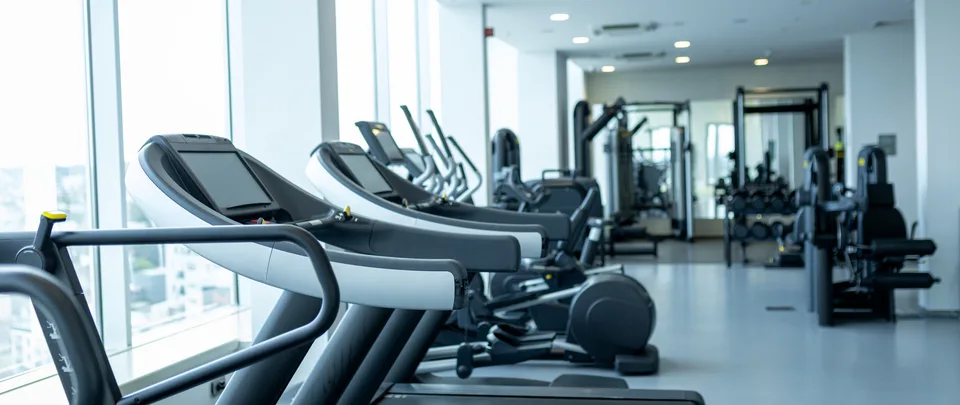

Michigan runs a substantial fitness market centered on metro Detroit — Warren, Sterling Heights — with Grand Rapids on the west side and the university town of Ann Arbor adding a young, active floor. Franchise density is heavy across the state, and long cold winters keep indoor demand strong. It is a strong place to run a gym, and one whose regulatory story runs opposite to what most owners expect from a fitness-statute state.
Michigan puts its regulatory weight on the opposite rule. The AED law is the one clearly codified, while a dedicated prepaid-membership bonding statute is not something we could confirm in primary law. This page walks through what the state actually requires, what it does not, and how the coverage is built around the member injury that defines the trade.
Michigan’s health-club law is its AED requirement — not a prepaid-dues bond
Michigan’s clearly-codified health-club-specific statute is its AED law, not a prepaid-membership bonding act. Michigan’s clearly-codified health-club-specific statute is its AED law, not a prepaid-membership bonding act. Health-club contract cancellation is handled under the general Home Solicitation Sales Act and the Michigan Consumer Protection Act; a widely-cited "$25,000 health-club bond" could not be corroborated in primary law and is not asserted. That is the honest picture, and it is worth stating plainly: no health-club registration or prepaid-dues bond was primary-confirmable; general consumer statutes govern contract cancellation.
What Michigan does have on solid footing is the safety side. The AED law — Act 23 of 2006 — requires a health club to keep an AED available on the premises for ready access and to employ at least one individual trained in first aid, CPR, and AED use, with hotels, single-sport-only facilities, and weight-reduction centers excluded. That is the state’s real fitness-facility mandate, and it is the one on firm codified ground. Meeting it does not change your insurance, but it is a compliance fact a defense would be measured against if a cardiac event became a claim. Neither the AED law nor the general consumer statutes are your liability coverage, though — the exposure that drives claims is the member on the floor, which is where a general liability program lives.
Comp is a private-market line in Michigan, and staff is the exposure
workers compensation is placed with a private carrier; for a fitness business the exposure is staff — trainers demonstrating movements under load, instructors teaching several classes a day, and front-desk and cleaning staff — so classifications and employers liability sizing matter more than the modest payroll suggests.
Workers compensation answers the staff member, while general liability answers the member on the floor — same room, two different systems. In Michigan the comp side is placed through the private market, so the classifications you assign your trainers and instructors, and how employers-liability limits are set, carry more weight than a modest payroll suggests. A trainer hurt demonstrating a movement under load is a comp claim; the member hurt beside them is a liability claim, and a Michigan program needs both built to match how the floor is staffed.
The thin statute does not shrink the member-injury exposure
A thin regulatory layer on the finance side does not soften the defining exposure. A Michigan strength or functional-fitness gym lives with loaded-movement injury — the dropped bar, the failed rep, the platform and whoever is near it. A high-tempo bootcamp or cycling studio lives with class-volume risk — many bodies moving fast under one instructor’s eye. A yoga or Pilates studio lives with the instructed movement and the hands-on adjustment, where the claim tends to follow what was taught. Plenty of Michigan facilities, franchise and independent alike, run more than one of these under one roof.
That is why a Michigan gym program is usually built as one structure covering general liability, professional liability for the instruction, commercial property for the racks and machines, workers compensation for the staff, and umbrella limits over the top — sized to the actual blend rather than a single label. Waivers matter here, and Michigan enforces them within limits: worth having, never a guarantee, and never a substitute for the coverage that pays when a claim lands.
What a Michigan member-injury claim tends to look like
The claims that reach a Michigan gym owner rarely look dramatic on the surface. A member finishes a heavy set and the bar comes down wrong. Someone slips on melt tracked in from a hard Michigan winter and goes down in the entry. A participant deep into a packed class catches an edge. A studio member says an assisted movement went further than agreed. None of these require a broken machine — the member was doing the thing your facility exists to let them do, and it went wrong. That is participant injury, and it is what a generic small-business policy is least prepared for.
What makes the difference in a Michigan claim is usually the paperwork and the posture around it — whether the member who got hurt had signed anything, whether the instruction that preceded the injury is defensible, and, given the AED law, whether the device and the trained-employee coverage were in place if a cardiac event is involved. The incident report your staff files, the waiver on record, and the way the class was run are the facts a defense is built from. We would rather walk a Michigan owner through where those exposures sit than have them discover the gaps during the claim that follows a class.
What a Michigan franchise agreement adds to the program
Michigan’s franchise density is heavy, and for a brand-affiliated gym the franchise agreement is often the strictest insurance document in the file — stricter than anything the state imposes. A brand agreement commonly requires specific limits, particular lines to be carried, and an additional-insured endorsement in the franchisor’s favor, and a program that does not meet those terms can put an owner out of compliance with the franchise even while the state’s thin fitness-statute layer is fully satisfied. The AED law and the franchise agreement are two different masters, and a Michigan program has to answer both.
For an independent Michigan operator the franchise question does not arise, but the landlord’s does — most gyms lease space, and the lease typically requires limits and additional-insured status of its own. Either way, the pattern is the same: the binding requirements on a Michigan gym’s coverage come from private agreements more than from the statute book, which is another face of the mirror-image posture this whole page describes. The state’s codified rule is the AED law; the requirements that actually shape the limits come from the franchise and the lease.
The winter, the physical plant, and business income
Long, cold Michigan winters put real pressure on the physical plant, and the losses that follow are the ones that close a gym’s doors. A frozen and burst pipe, an ice-dam leak, or a heating-system failure in a deep cold snap can shut a facility for weeks, and while the doors are closed the membership revenue stops but the lease and the core payroll do not. Commercial property answers the damage to the equipment and build-out, and business income answers the closure behind it — the part that decides whether a Michigan operator rides out a winter loss or watches the membership base drift while the facility is dark.
The through-line is that none of this — the franchise limits, the lease requirements, the winter property exposure, the business-income sizing — is touched by Michigan’s fitness statute. The AED law is the state’s one codified fitness requirement, and the substance of the protection sits entirely in the coverage the owner and their agreements assemble around it.
The Michigan fitness markets we cover
Michigan centers on metro Detroit — Warren and Sterling Heights — plus Grand Rapids and the university town of Ann Arbor, with heavy franchise density and strong indoor demand through cold winters. We place coverage across all of it — the gyms of Detroit and Warren, the west-side market in Grand Rapids, and the floors of Sterling Heights and Ann Arbor — for owners who want a program built around how a Michigan facility actually runs, including whatever a franchise agreement adds. For a plain read on the AED law, the contract side, and the coverage alongside them, send us your details and we will walk you through it.
Why Gym Guard Insurance in Michigan
We are an independent agency that writes one class — gyms and fitness facilities — and we read a Michigan quote against other Michigan quotes. That means we check the things that actually decide whether a policy will work here: how participant injury is treated, whether the professional liability alongside is real, whether the AED obligation and any franchise requirements are accounted for, and whether the program reflects the real mix of barbell, class, and studio activity under your roof. Michigan runs opposite to the pattern owners expect on this axis: it has no primary-confirmable prepaid-membership bonding statute (a widely-marketed "$25,000 bond" could not be verified), but it DOES require a health club to keep an AED and a trained employee on premises (Act 23 of 2006) — the safety law is the codified one.
Learn more
- General Liability Insurance — member and guest injury on your premises, the signature line.
- Professional Liability Insurance — the injury that follows instruction.
- Workers Compensation Insurance — the staff side, placed through the private market.
- Cost factors for Michigan gyms and studios — how staffing, equipment, and hours change what a policy costs.
- Strength & weightlifting gyms · Group fitness & cycling studios · Yoga & Pilates studios
- All states we serve · All coverage lines
Gym and fitness insurance in Michigan — FAQ
Does Michigan require a bond for our gym’s prepaid memberships?
Not that we could confirm in primary law. A “$25,000 Michigan health-club bond” is widely marketed, but we could not corroborate a dedicated prepaid-membership bonding statute in the state’s codified law, so we do not assert one. What Michigan clearly does have on the contract side are general consumer statutes — the Home Solicitation Sales Act and the Michigan Consumer Protection Act — that govern how memberships are sold and canceled. If a bond obligation applies to your specific situation, it is worth confirming against the current statute rather than relying on a marketing claim, and none of it is your liability coverage in any case.
So what does Michigan actually require of a health club?
Michigan’s clearly-codified health-club-specific requirement is its AED law — Act 23 of 2006 (MCL 333.26311–333.26314). A health club must have an AED available on the premises for ready access and must employ at least one individual trained in first aid, CPR, and AED use. That inverts the usual expectation — here the safety law is the requirement on solid footing, not a prepaid-dues finance statute. Meeting it does not change your insurance, but it is a compliance fact a defense would be measured against if a cardiac event ever became a claim.
Which facilities are excluded from Michigan’s AED requirement?
The AED law does not reach every facility. Under Act 23 of 2006, hotels, single-sport-only facilities, and weight-reduction centers are excluded from the health-club AED requirement. The practical read for an owner is to check whether your facility falls inside or outside the definition before assuming either way — a mixed-use or single-sport model may sit differently than a full-service gym. It is a compliance question rather than an insurance term, but the two intersect if an incident ever becomes a claim, so it is worth getting right up front.
When a member blames the coaching for an injury, is that a general-liability or professional-liability claim in Michigan?
That kind of allegation lands on the professional-liability side of the line. General liability answers the member simply hurt on your premises — the fall, the dropped plate, the wet floor. Professional liability answers the claim that the injury came from what a coach or instructor told or did — the cue, the correction, the programmed movement the member says went too far. A Michigan studio or training floor generates both kinds of claim, which is why the two lines are sized together on one program rather than assuming general liability alone will answer a coaching claim.
We run strength, classes, and open gym in one Detroit-area facility. Is that one policy or several?
It is usually one program written to reflect the whole blend, and describing the real mix is what gets the coverage right. A single Detroit-area floor running loaded strength work, group classes, and open-gym access carries more than one injury profile under one roof, and a Michigan gym program covers general liability, professional liability, property, workers compensation, and umbrella limits as one structure sized to those activities. Picking the label that sounds simplest, rather than telling us what actually happens on the floor, is what leaves a claim landing in a gap.
Does insurance work differently for a franchise-brand gym in Michigan?
The core coverage is the same — member injury, instruction, staff, property — but a franchise agreement often adds its own insurance requirements on top, and Michigan’s heavy franchise density means this comes up a lot here. A brand agreement may require specific limits, an additional-insured endorsement in the franchisor’s favor, or particular lines to be carried, and a program that does not meet those terms can put an owner out of compliance with the franchise even while the state is satisfied. Telling us what your franchise agreement requires, if you run under one, is part of building a Michigan program that actually holds up on both fronts.
Sources
The Michigan regulatory statements on this page are drawn from primary government sources. Verify them directly:
- Michigan Attorney General (Consumer Protection Team) — the administering agency
- Michigan Compiled Laws 333.26312 — Medical Emergencies in Health Clubs (Act 23 of 2006) — the health-club AED and trained-employee requirement
Get gym insurance built for how you run in Michigan
Tell us your formats, your staff, your equipment, and whatever your franchise agreement requires — and we will market it to carriers that write the class across Michigan.