Gym & fitness insurance by state
Gym & Fitness Business Insurance in Arkansas
From Little Rock to the Northwest Arkansas corridor — coverage built around member injury, health-spa registration, and an AED mandate with real teeth.
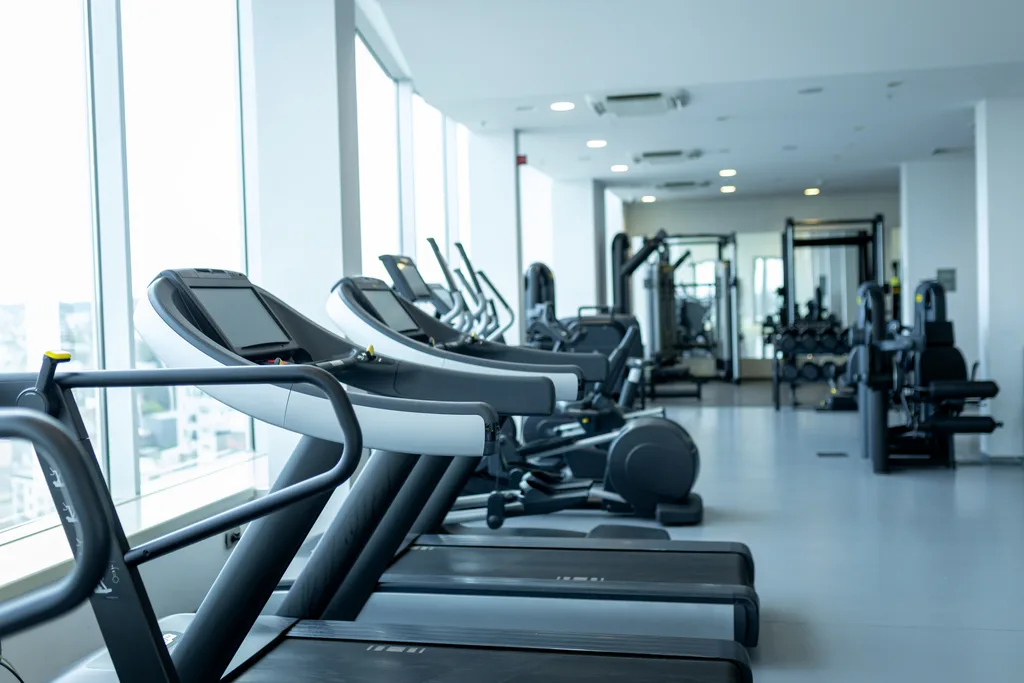

Arkansas centers its fitness market on Little Rock and the fast-growing Northwest Arkansas corridor — Fayetteville, Springdale, and Bentonville — anchored by major corporate headquarters that keep pulling in new residents, with Fort Smith and Jonesboro rounding out the state. It is a strong and growing place to run a gym, and one where the state does something few others do: it layers two separate statutes on a fitness business, one about members’ money and one about members’ safety, each carrying its own consequences.
Arkansas registers health spas to protect prepaid dues, and it separately mandates an AED with a penalty that reaches your membership contracts. Neither is a facility license, and neither answers the exposure that actually drives claims — the member hurt on the floor. This page walks through both obligations, and how the coverage is built around that injury.
Arkansas runs two separate statutes — a health-spa registration and an AED mandate
Arkansas regulates gyms and fitness facilities through the Health Spa Consumer Protection Act (Ark. Code §§4-94-101 to 4-94-109). Here is what it actually is: a consumer-finance statute: it requires registration with the Secretary of State and a bond to protect prepaid dues, and governs contract and cancellation rights. It is not a facility-safety license.
In practice, registration with the Secretary of State plus a bond to secure prepaid memberships (the exact bond mechanism is confirmed at the data touch rather than asserted). That registration, administered by the Arkansas Secretary of State, protects members’ prepaid money if the spa closes — a consumer-finance filing, not a facility-safety license. What sets Arkansas apart is the second statute. Under Ark. Code §20-13-1306, each health spa must have at least one AED, a trained employee on duty during staffed hours, and warning signage if the facility is unstaffed — and noncompliance can make the services contract voidable. That is a public-health mandate with a sharp edge: it ties the AED obligation directly to the enforceability of the memberships you sell.
Two statutes, two different jobs — one protects members’ money, the other protects members’ safety — and neither is your liability coverage. The registration answers what happens to prepaid dues if you close; the AED law addresses a medical emergency and the paperwork around it. Neither answers what happens when a member is hurt doing the thing they came in to do, which is where a general liability program lives. An owner who satisfies both statutes and stops there has met the state and left the injury exposure — the more frequent claim by far — untouched.
Comp is a private-market line in Arkansas, and staff is the exposure
workers compensation is placed with a private carrier; for a fitness business the exposure is staff — trainers demonstrating movements under load, instructors teaching several classes a day, and front-desk and cleaning staff — so classifications and employers liability sizing matter more than the modest payroll suggests.
Workers compensation answers the staff member, while general liability answers the member on the floor — same room, two different systems. In Arkansas the comp side is placed through the private market, so the classifications you assign your trainers and instructors, and how employers-liability limits are set, carry more weight than a modest payroll suggests. A trainer hurt demonstrating a movement under load is a comp claim; the member hurt beside them is a liability claim, and an Arkansas program needs both built to match how the floor is staffed.
Member injury is the exposure an Arkansas gym is built to answer
Underneath the two-statute detail, an Arkansas gym carries the same defining exposure as a gym anywhere: someone gets hurt doing the exact thing they came in to do. What varies is the physics of the room. A strength or functional-fitness box lives with loaded-movement injury — the dropped bar, the failed rep, the platform and whoever is near it. A high-tempo bootcamp or cycling studio lives with class-volume risk — many bodies moving fast under one instructor’s eye. A yoga or Pilates studio lives with the instructed movement and the hands-on adjustment, where the claim tends to follow what was taught.
Three injury profiles, and plenty of Arkansas facilities run more than one under a single roof. That is why an Arkansas gym program is usually built as one structure covering general liability, professional liability for the instruction, commercial property for the racks and machines, workers compensation for the staff, and umbrella limits over the top — sized to the actual blend rather than a single label. Waivers matter here, and Arkansas enforces them within limits: worth having, never a guarantee, and never a substitute for the coverage that pays when a claim lands.
What an Arkansas member-injury claim tends to look like
The claims that reach an Arkansas gym owner rarely look dramatic on the surface. A member finishes a heavy set and the bar comes down wrong. Someone steps off a treadmill still moving and goes down. A participant deep into a packed class catches an edge. A studio member says an assisted movement went further than agreed. None of these require a broken machine — the member was doing the thing your facility exists to let them do, and it went wrong. That is participant injury, and it is what a generic small-business policy is least prepared for.
What makes the difference in an Arkansas claim is usually the paperwork and the posture around it — whether the member who got hurt had signed anything, whether the instruction that preceded the injury is defensible, and, given the AED statute, whether the device, the trained-employee coverage, and the signage were in place if a cardiac event is involved. The incident report your staff files, the waiver on record, and the way the class was run are the facts a defense is built from. We would rather walk an Arkansas owner through where those exposures sit than have them discover the gaps during the claim that follows a class.
Equipment, the lease, and a corporate-anchored corridor
Arkansas gyms tend to be equipment-dense, and in a strength or functional-fitness facility the racks, platforms, machines, cardio fleets, flooring, and mirrors are often the largest single concentration of value in the building. Commercial property answers damage to those assets, and business income answers the harder problem behind them — the month the doors stay shut while membership revenue stops but the lease payment does not. In the fast-growing Northwest Arkansas corridor, many operators are building out new space and signing fresh leases, which puts the build-out and the split between the landlord’s policy and yours squarely in the conversation.
On the road, many Arkansas gyms own no vehicles at all, which is why commercial auto gets overlooked — hired and non-owned auto is the piece that answers a staff member driving their own car for the business across the corridor or between locations. It is a small part of an Arkansas program that is cheap to arrange and awkward to be without.
When the AED compliance and the claim file meet
Arkansas’s AED statute is unusual in tying the device, the trained-employee coverage during staffed hours, and the unstaffed-hours signage directly to the enforceability of a membership contract. That gives the compliance detail a second life inside a claim. If a cardiac event on your floor becomes a claim, the questions a defense will face are not only whether an AED was present but whether the trained-employee coverage matched your staffed hours and whether the signage was posted when the facility was unattended. The statute and the liability exposure, usually treated as separate worlds, meet squarely in that file.
The practical consequence is that an Arkansas owner running any kind of 24-hour or unattended-access model has a sharper compliance picture than a fully staffed facility does. The device alone is not the obligation; the staffing pattern and the signage are part of it, and both are the sort of operational detail that is easy to let drift and costly to have drifted if an incident occurs. It is a compliance matter, not an insurance term, but the two intersect at exactly the moment that matters most.
Above the underlying lines, umbrella limits answer the serious member-injury claim that runs past the general and professional liability, and in the growing Northwest Arkansas corridor — where member volume and facility size are climbing — that layer is worth carrying rather than assuming the base limits will hold. The two statutes protect members’ money and members’ safety; the coverage is what protects the business when a claim actually lands.
The Arkansas fitness markets we cover
Arkansas centers on Little Rock and the fast-growing Northwest Arkansas corridor — Fayetteville, Springdale, and Bentonville — anchored by major corporate headquarters, plus Fort Smith and Jonesboro. We place coverage across all of it — the gyms of Little Rock and Fayetteville, the corridor around Springdale, and the market in Fort Smith and Jonesboro — for owners who want a program built around how an Arkansas facility actually runs. For a plain read on the registration, the AED mandate, and the coverage alongside them, send us your details and we will walk you through it.
Why Gym Guard Insurance in Arkansas
We are an independent agency that writes one class — gyms and fitness facilities — and we read an Arkansas quote against other Arkansas quotes. That means we check the things that actually decide whether a policy will work here: how participant injury is treated, whether the professional liability alongside is real, whether the registration and AED obligations are accounted for, and whether the program reflects the real mix of barbell, class, and studio activity under your roof. Arkansas has TWO separate statutes: a Secretary-of-State health-spa registration protecting prepaid dues, and a public-health AED mandate (Ark. Code §20-13-1306) requiring an AED, a trained employee during staffed hours, and unstaffed-hours signage — with a voidable-contract penalty for noncompliance.
Learn more
- General Liability Insurance — member and guest injury on your premises, the signature line.
- Professional Liability Insurance — the injury that follows instruction.
- Workers Compensation Insurance — the staff side, placed through the private market.
- Cost factors for Arkansas gyms and studios — how staffing, equipment, and hours change what a policy costs.
- Strength & weightlifting gyms · Group fitness & cycling studios · Yoga & Pilates studios
- All states we serve · All coverage lines
Gym and fitness insurance in Arkansas — FAQ
Does Arkansas require our health spa to register?
Yes, if you sell memberships. The Health Spa Consumer Protection Act requires registration with the Secretary of State and a bond to secure members’ prepaid dues. It is a consumer-finance filing about the money members pay you in advance — not a facility-safety license. Registering tells the state your spa exists and that prepaid dues are protected; it says nothing about whether your floor is safe or your coverage adequate. Those are the separate questions an insurance program answers, and in Arkansas they sit alongside a second, distinct obligation — the AED mandate — that most owners do not realize is a different law entirely.
Is it true that Arkansas can void our membership contracts if we do not meet the AED rule?
It can, and that is what makes the Arkansas AED mandate unusually pointed. Under Ark. Code §20-13-1306, each health spa must have at least one AED, a trained employee on duty during staffed hours, and warning signage if the facility is unstaffed — and noncompliance can make the services contract voidable. In other words, the AED obligation is tied directly to the enforceability of the memberships you sell, which is a sharper consequence than the general good-practice framing more commonly used. It does not change your insurance, but it is a compliance fact worth taking seriously, and one a defense would be measured against if a cardiac event became a claim.
What does “staffed hours” mean for our Arkansas AED obligation?
The Arkansas requirement distinguishes between when your facility is staffed and when it is not. During staffed hours, the rule calls for a trained employee on duty alongside the AED; when the facility is unstaffed — a 24-hour access model, for instance — it calls for warning signage instead. The practical read for an owner running any kind of unattended access is to make sure the signage side of the obligation is handled, not just the device itself. It is a compliance detail rather than an insurance term, but the two intersect if an incident ever becomes a claim, so it belongs in the same planning conversation.
If a member says an instructor’s direction led to the injury, which line answers in Arkansas?
That allegation lands on the professional-liability side of the line. General liability answers the member simply hurt on your premises — the fall, the dropped plate, the wet floor. Professional liability answers the claim that the injury came from what a trainer told or did — the cue, the correction, the programmed movement the member says went too far. An Arkansas studio floor generates both kinds of claim, which is why the two lines are sized together on one program rather than assuming general liability alone will answer an instruction claim.
We run classes and open gym out of one Bentonville facility. Is that one policy or several?
It is usually one program written to reflect the whole blend, and describing the real mix is what gets the coverage right. A single Bentonville floor running group classes alongside open-gym access carries more than one injury profile under one roof, and an Arkansas gym program covers general liability, professional liability, property, workers compensation, and umbrella limits as one structure sized to those activities. Picking the label that sounds simplest, rather than telling us what actually happens on the floor, is what leaves a claim landing in a gap.
What shapes a gym insurance premium in Arkansas?
There is no single Arkansas figure, because premium follows your specific operation — your payroll and staff classifications, your revenue and membership base, your square footage and equipment, the formats you run, and your claims history. A Little Rock strength gym and a Northwest Arkansas studio of the same size look very different to an underwriter, and the registration and AED obligations are compliance facts rather than premium drivers. We price to the real Arkansas risk rather than a generic guess, and we will walk you through the drivers that actually move the number.
Sources
The Arkansas regulatory statements on this page are drawn from primary government sources. Verify them directly:
- Arkansas General Assembly — Arkansas Law (where the Code of Arkansas is published) — where the Health Spa Consumer Protection Act (Ark. Code §§4-94-101 to 4-94-109) is codified
Get gym insurance built for how you run in Arkansas
Tell us your formats, your staff, your equipment, and how you handle the registration and AED obligations — and we will market it to carriers that write the class across Arkansas.