

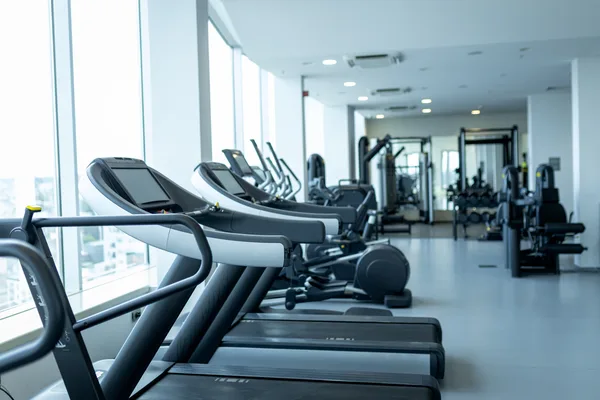
Iowa gym insurance carries no published price, and the state adds a wrinkle most owners miss: one chapter of the Iowa Code governs both your prepaid membership money and the defibrillator on your wall. Everything else that sets your premium comes from the facility you actually operate, described accurately.
Below is what an underwriter genuinely weighs for an Iowa fitness business — the people you employ, the floor you run, the formats you program, the hours you leave unstaffed, and the record you can hand over when something goes wrong.
Why an Iowa gym quote starts with your operation, not a rate card
Insurance for a gym is priced from exposures, and exposures are specific. An underwriter wants to know how many people work for you and what they physically do all day, how many members walk through your door and at what hours, how much floor you operate and what sits on it, and what your loss record looks like. Each of those inputs moves the number on its own.
A figure published for “an Iowa gym” averages a mind-body studio in a Cedar Rapids strip center against a barbell room in Des Moines running keyholder access overnight, and neither owner learns anything from the average. Our Iowa gym and fitness business insurance page covers the market and regulatory picture; this guide is the cost explainer beside it.
One Iowa chapter reaches both the money and the defibrillator
Members’ money and emergency equipment are two different questions, and Iowa answers both inside a single chapter. The Physical Exercise Clubs statute, Iowa Code chapter 552, requires registration with the Attorney General and either escrow or a bond to secure prepaid dues — and the same chapter, at 552.15, requires a physical exercise club to keep an automated external defibrillator on the premises.
That matters twice over. First, the defibrillator citation sits at 552.15, not in the general Good Samaritan law that startup guides routinely mis-cite, so an owner reading the wrong statute reaches the wrong conclusion about what Iowa expects. Second, the chapter is a consumer-finance law: it protects members’ money and sets that one equipment requirement, but it does not license your facility, inspect your racks, or say anything about how a member gets hurt on your floor. The Attorney General administers it as a filing and enforcement matter, not as a safety regulator.
The distance between what chapter 552 covers and what can actually happen in your building is exactly where your general liability program lives.
Who is on your payroll and what their day actually looks like
Payroll is the rating basis for workers compensation and a meaningful input to liability pricing, but its composition matters as much as its size.
A front-desk employee, a cleaner, and a coach who spends the shift loading a bar and showing members the movement are three different exposures. The coach is the one owners describe least accurately, because the job reads as teaching while the body is doing physical work under load, over and over, all shift. That is an employee-injury exposure hiding inside an instruction job, and correcting it is the most common fix we make to an Iowa submission. It cuts both ways — a wrong classification overstates cost as easily as it understates coverage. Place it deliberately alongside your workers compensation line rather than letting a payroll export decide it.
Escrow or bond — the prepaid-dues choice behind chapter 552
If you sell memberships paid in advance, 552.16 gives you a choice: hold the money in escrow, or post a bond in its place. Neither option is insurance and neither reduces a premium, but the decision has a real cost shape.
Escrow ties up cash you have already collected. A bond frees the cash but is a credit product — a surety reads your financial statements and prices accordingly, and a thin balance sheet costs more or gets declined outright. Owners selling long prepaid terms feel this most, and they are the same owners whose revenue mix an underwriter will ask about.
Budget that compliance cost separately from the insurance cost. Conflating the two is how owners come to believe the state filing protects them against a member injury claim. It does not.
The room itself: floor space and the loaded equipment on it
Square footage sets the property side of the program and shapes the liability side, but a gym is unusual in that the value and the hazard are the same objects. Racks, platforms, plate-loaded machines, and cardio equipment are simultaneously what you insure and what a member can be hurt by.
Density decides more than area. A tightly packed barbell floor in an older Quad Cities building reads very differently from the same footprint running mostly cardio in a newer Des Moines suburban space. Maintenance records help here more than owners expect, because documented service on the machines your members load speaks directly to the mechanism of a foreseeable claim.
What you program: barbell, group tempo, and mind-body under one roof
This is where a gym stops being a single risk class. The formats you schedule produce genuinely different injuries, and different injuries reach you through different coverages.
A strength floor is a severity question. Loads are heavy, failures happen fast, and progressive overload means members work near their limits by design. Our weightlifting gym page covers how that room is read.
A tempo-driven group class is a supervision question — one instructor cueing many bodies at a pace the room follows rather than sets, where exposure scales with class size and instructor ratio rather than with load. See group fitness studios.
A mind-body floor produces fewer sudden events and more arguments about what was said, cued, or adjusted. That is professional liability ground more than general liability, and it is the seam that mixed facilities describe worst. See yoga and Pilates studios.
Run all three and you have three conversations, not one averaged rate.
Real-World Scenario: An Iowa City club renews its chapter 552 filing every year without incident and assumes the state has the safety question covered. A member collapses during a morning class. The defibrillator is on the wall exactly as 552.15 requires and staff use it well — and the family’s attorney still asks who was supervising, what the intake form said, and whether the equipment nearby had been serviced. The registration answered none of those questions, because it was never built to.
Winter, the Iowa membership cycle, and traffic through the door
Iowa winters push training indoors, and indoor demand is not spread evenly across the year. Traffic climbs when the weather closes in and again at the turn of the year, which means the busiest weeks in your building are also the weeks with the most new members on unfamiliar equipment.
An underwriter reads that as opportunity for loss rather than as a marketing win. How many people come through, how often, and at which hours is the plainest exposure a gym has, and it is the one owners most often answer with square footage instead of attendance. Iowa City’s student calendar and the Des Moines commuter schedule produce very different daily curves in facilities of identical size.
Hours nobody is watching: keyholder access in a mid-sized market
Unstaffed access is a genuine model across Iowa’s smaller markets, where staffing a desk through slow hours is hard to justify. It is also a real underwriting question, because it changes who observes an incident, who documents it, and what your cameras and access control can establish afterward.
Carriers diverge sharply here. Some price the hours, some restrict which formats may run inside them, some decline the model outright. That variance is the reason to disclose unstaffed access in the first conversation rather than after a claim tests it.
Loss history, limits, and what your lease demands
Your claims record is the input you cannot rewrite, and it gets read for pattern rather than for total. Several small incidents documented carefully read better than one event with a thin file behind it.
Limits and retention you do control. Your lease will set minimums, and a franchise agreement usually sets its own — often higher, and usually with additional-insured wording attached. Those documents decide whether an umbrella belongs in the program, and reading them before you shop saves re-quoting afterward. If the business owns a vehicle for equipment runs or community events, commercial auto belongs in the same conversation.
Getting a quote that reflects your Iowa facility
Give an underwriter the real operation: your schedule, your staffed and unstaffed hours, what your coaches physically do all day, the equipment on your floor and when it was last serviced, and the limits your landlord and any franchisor require.
Send those details through our quote form, or read how we work first. A submission that describes an actual Iowa gym gets priced as one.